Many products list their dimensions in centimeters, but a number alone doesn’t always help you picture the actual size. If you’re shopping online, working on a DIY project, or comparing household items, seeing 8 cm on a product page can leave you wondering whether it’s larger or smaller than you expect.
The easiest way to understand a measurement is by comparing it with familiar objects. Instead of trying to imagine 8 centimeters, you can relate it to real products that are manufactured with the same dimensions. Once you’ve seen a few examples, recognizing 8 cm size becomes much easier in everyday life.
In this guide, you’ll learn how big is 8 cm, discover 10 things that are 8 cm, compare 8 cm in inches, and find simple ways to estimate 8 centimeters without using a ruler.
📏 8 cm at a Glance
Wondering how big is 8 cm? A measurement of 8 centimeters is equal to 80 millimeters, 3.15 inches, 0.08 meters, and 0.26 feet.
8 cm
Centimeters
80 mm
Millimeters
3.15 in
Inches
0.26 ft
Feet
Quick Answer: 8 cm equals 80 mm, 3.15 inches, 0.08 meters, and 0.26 feet. It is just over 3 inches long and is a common size for products like hole saws, silicone stretch lids, air vent covers, and plant pot saucers.
8 cm Conversion Table
| Unit | Value |
| Millimeters | 80 mm |
| Inches | 3.15 in |
| Meters | 0.08 m |
| Feet | 0.26 ft |
Whether you’re using the metric or imperial system, these conversions make it easy to understand how 8 centimeters compares with other common measurements.
How Big Is 8 cm?
In your hand, 8 cm feels noticeably larger than many everyday accessories. It provides enough length to grip comfortably while still being compact enough to fit inside a pocket, toolbox, or kitchen drawer. Compared to 7 cm, the extra centimeter is easy to notice when two objects are placed side by side. For more small cm guide you can see our 3 cm guide.
On a flat surface, 8 cm creates a clearly visible measurement that’s slightly longer than 3 inches. This size is commonly used for plumbing parts, ventilation components, kitchen accessories, and workshop tools because it offers a practical balance between compactness and usability.
How Does 8 cm Compare to Everyday Objects?
One of the easiest ways to understand 8 cm is by comparing it with products you may already have at home. While the number itself may seem abstract, seeing it in real objects gives you a much better sense of scale.
For example, an 80 mm silicone lid stretches across the opening of a small container, while an 80 mm hole saw cuts a noticeably wide opening in wood or drywall. A round air vent cover with an 80 mm diameter also provides a practical visual reference because it is manufactured to a fixed size.
Once you become familiar with a few objects measuring 8 centimeters, estimating similar lengths becomes much easier without reaching for a ruler every time.
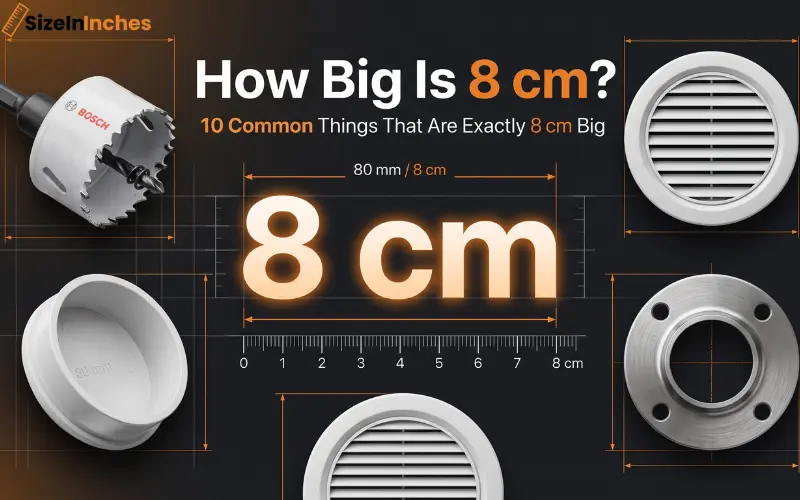
10 Things That Are Exactly 8 cm
The following examples are based on manufacturer specifications or standardized product dimensions, making them reliable references for understanding 8 centimeters.
1. Bosch 80 mm Hole Saw
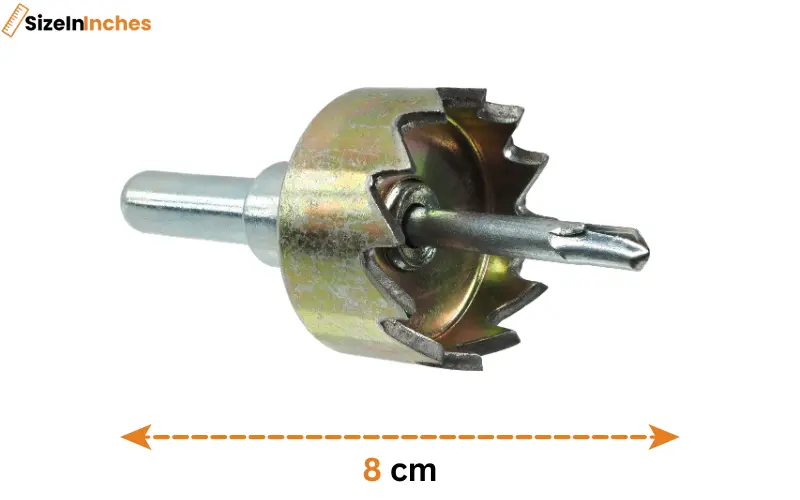
Bosch manufactures 80 mm hole saws designed to cut clean circular openings in wood, drywall, plastic, and other building materials. The 80 mm cutting diameter is clearly listed in the manufacturer’s specifications, making it a dependable reference for visualizing 8 centimeters.
These hole saws are commonly used by electricians, plumbers, contractors, and DIY enthusiasts when installing pipes, vents, recessed lighting, and cable access points. Because the cutting edge is precision-engineered, every tool is produced to the same diameter.
Holding an 80 mm hole saw immediately shows how much space 8 cm covers. Its circular shape makes the measurement easy to compare with other household objects or construction materials.
If you’re trying to picture how big is 8 cm, this tool provides one of the clearest real-world examples because its dimensions are fixed during manufacturing.
2. 80 mm PVC End Cap
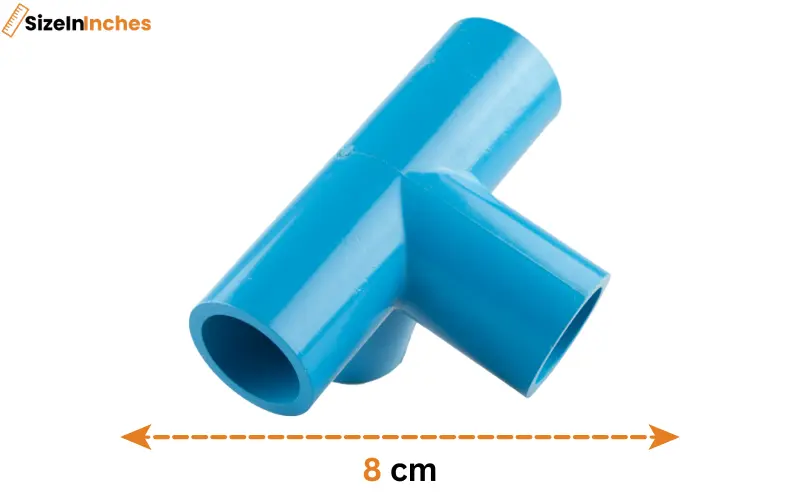
PVC end caps are widely used in plumbing systems to seal the end of pipes and protect them from debris or water leaks. Many plumbing manufacturers produce 80 mm PVC end caps as part of their standard product range.
You’ll commonly find these fittings in residential plumbing, irrigation systems, drainage installations, and construction projects. Because each cap is manufactured to fit a specific pipe size, the diameter remains consistent across products.
The round shape makes it easy to recognize the full 8 cm measurement at a glance. Whether you’re holding one in a hardware store or using it during a home repair project, it provides an accurate visual reference.
Since the measurement is standardized by manufacturers, an 80 mm PVC end cap is another excellent example of things that are 8 cm.
3. 80 mm Round Air Vent Cover
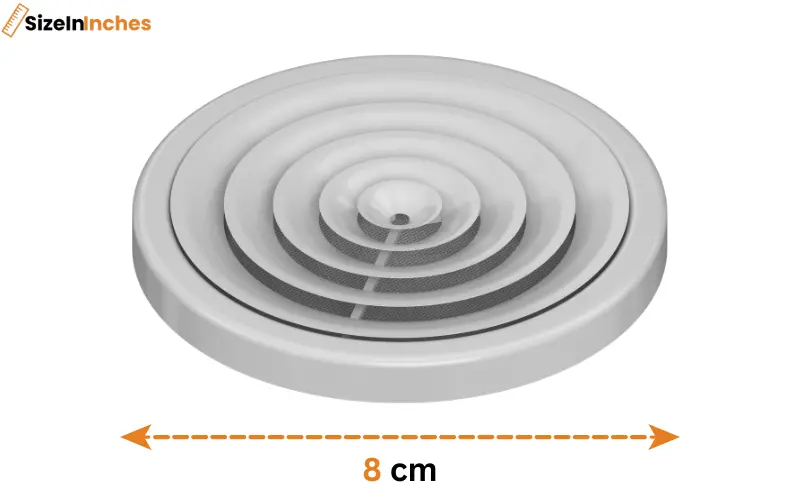
HVAC manufacturers produce 80 mm round air vent covers for small ventilation systems in homes, offices, and workshops. These covers are designed to fit standard duct openings, so their diameter is carefully controlled during production.
You’ll often see them installed in walls, ceilings, utility rooms, and storage spaces where airflow needs to be maintained. Their compact size makes them suitable for smaller ventilation applications.
Looking directly at the face of the vent gives you a clear picture of what 8 centimeters looks like. The perfectly round design makes the diameter easy to judge without measuring.
Because the dimensions are published by manufacturers, an 80 mm vent cover serves as a reliable example of 8 cm size.
4. 80 mm Stainless Steel Pipe Flange
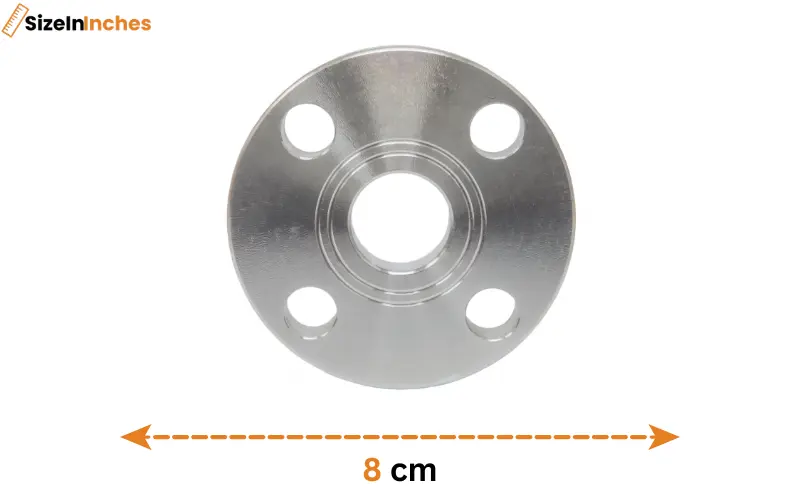
Industrial pipe flanges are manufactured according to standardized dimensions, with 80 mm being one of the commonly available sizes for certain applications. These components are used to connect pipes securely in plumbing, manufacturing, and engineering systems.
Made from durable stainless steel, the flange features a precisely machined circular opening and evenly spaced bolt holes. Every part is produced to strict tolerances so it can fit correctly with matching equipment.
Its solid metal construction makes the 80 mm diameter easy to observe and compare with nearby objects. Even without a ruler, the circular profile provides a strong visual reference for 8 centimeters.
For anyone interested in engineering or home improvement, an 80 mm stainless steel pipe flange is another dependable way to understand how long is 8 cm.
5. 80 mm Silicone Stretch Lid
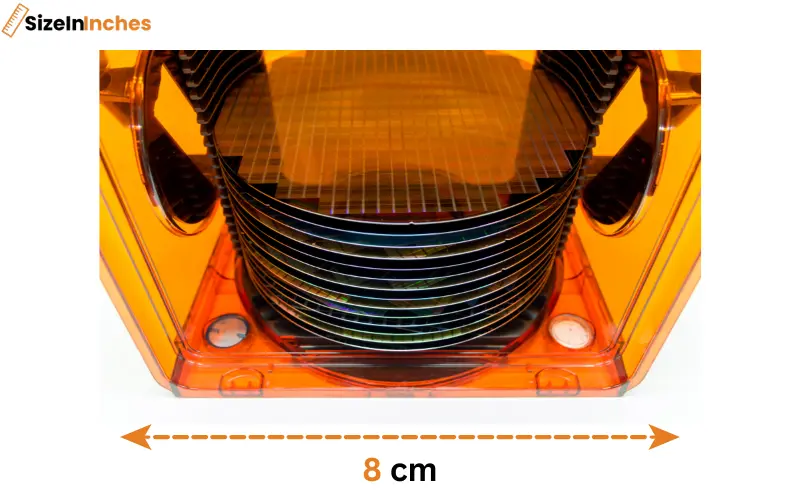
Reusable silicone stretch lids are available in several standard diameters, including 80 mm, to fit bowls, cups, jars, and food containers. Many kitchenware brands manufacture these lids with precise measurements so they create a tight, leak-resistant seal.
You’ll commonly find them in home kitchens where they’re used as an eco-friendly alternative to plastic wrap. Their flexible material allows them to stretch slightly while maintaining the original 80 mm size when not in use.
When placed over a small container, the lid clearly demonstrates how much space 8 centimeters covers. The circular shape also makes it easy to compare with other household items.
Because manufacturers publish the exact diameter, an 80 mm silicone stretch lid provides a dependable example of how big is 8 cm.
6. 80 mm Plant Pot Saucer
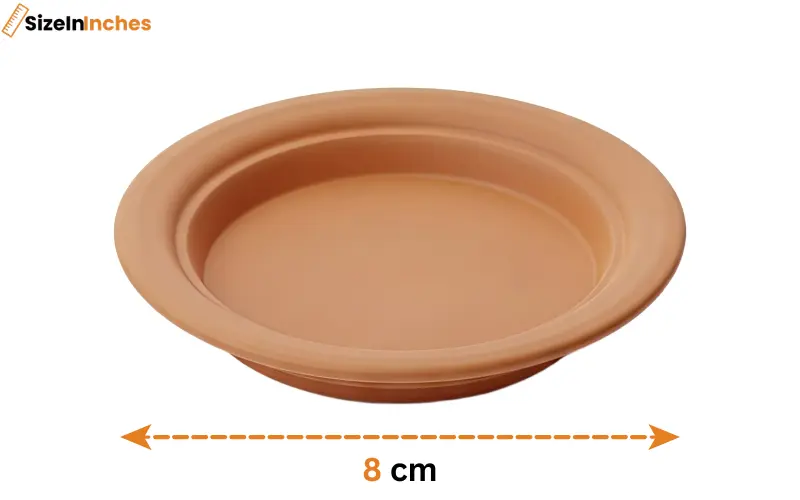
Garden suppliers manufacture 80 mm plant pot saucers for small flower pots, succulents, herbs, and indoor plants. The diameter is clearly listed in product specifications so customers can choose the correct size for their pots.
These saucers are designed to catch excess water and protect tables, windowsills, and shelves from moisture damage. Their compact size makes them ideal for miniature planters commonly used indoors.
Looking at the saucer from above gives you an immediate visual understanding of 8 centimeters. Its perfectly round design makes the measurement easy to recognize without using a ruler.
If you’re searching for practical things that are 8 cm, an 80 mm plant pot saucer is another excellent real-world example.
7. 80 mm Circular Sanding Disc
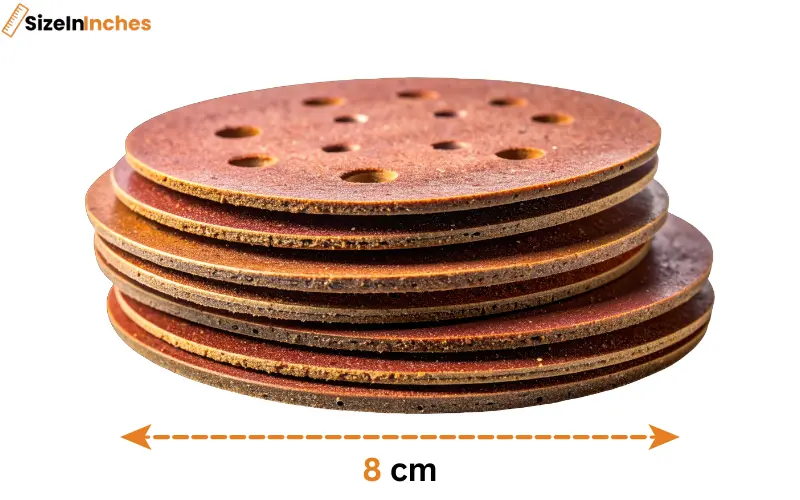
Power tool manufacturers produce 80 mm circular sanding discs for detail sanders and finishing tools. The diameter is standardized to ensure the discs fit compatible sanding equipment correctly.
These sanding discs are widely used for smoothing wood, plastic, painted surfaces, and metal before finishing or painting. You’ll often find them in woodworking shops, garages, and home improvement projects.
Because the disc forms a perfect circle, it provides a clear representation of an 8 cm diameter. Holding one against a work surface makes it easy to compare its size with nearby objects.
Since manufacturers specify the exact measurement, an 80 mm sanding disc serves as another reliable reference for 8 cm size.
8. 80 mm Cabinet Rosette (Escutcheon Plate)
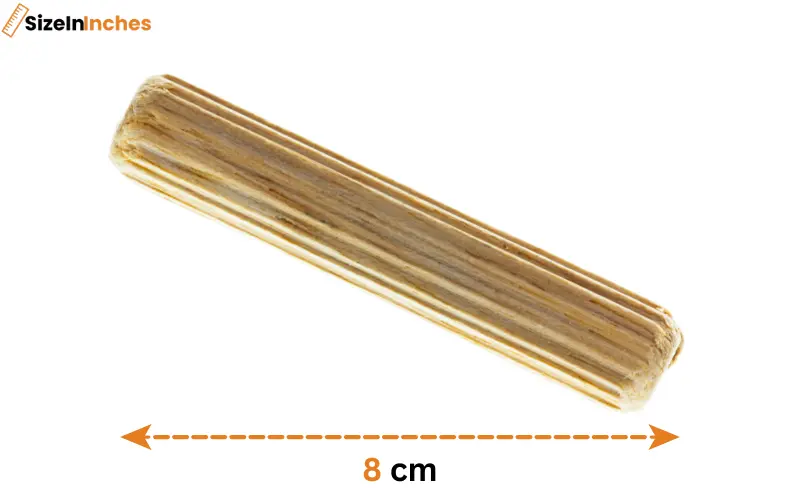
Decorative cabinet rosettes, also called escutcheon plates, are manufactured in various standard sizes, including 80 mm. Furniture hardware suppliers produce these circular plates to add a decorative finish around cabinet knobs, handles, and furniture fittings.
You’ll commonly see them on wardrobes, dressers, kitchen cabinets, and antique-style furniture. Besides improving appearance, they also help protect the surrounding surface from scratches and wear.
The wide circular profile makes the 80 mm diameter easy to visualize. Because it’s installed on visible furniture, it becomes a practical everyday reference for understanding 8 centimeters.
An 80 mm cabinet rosette is another useful example of how long is 8 cm in real life.
9. 80 mm Round Wax Seal Stamp Base
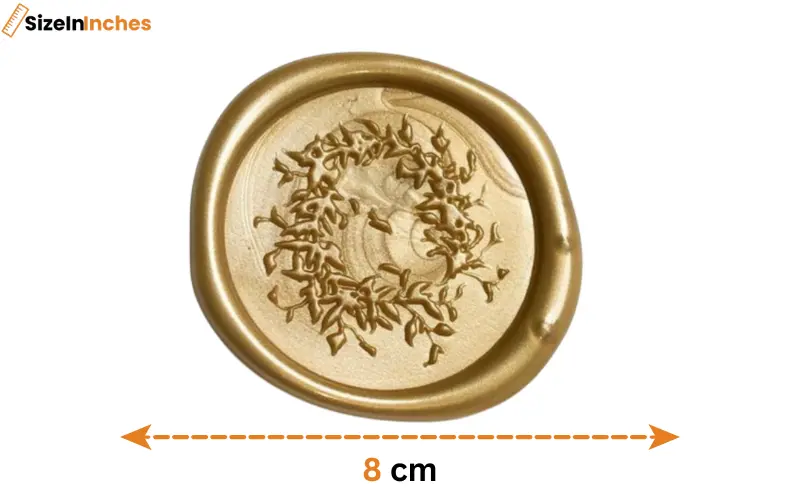
Craft suppliers manufacture 80 mm round wax seal stamp bases for oversized decorative projects, invitations, certificates, and creative artwork. The base diameter is precisely measured to ensure consistent impressions during use.
These larger stamp bases are popular among artists, stationery designers, and hobbyists creating personalized crafts. Although most traditional wax seals are smaller, oversized versions are often used for decorative displays and teaching demonstrations.
The perfectly circular base provides an excellent visual representation of an 8 cm diameter. Its flat design also makes the measurement easy to compare with paper, envelopes, and other craft materials.
If you’re interested in creative projects, an 80 mm wax seal stamp base offers another dependable way to picture 8 centimeters.
10. 80 mm Round Cork Trivet
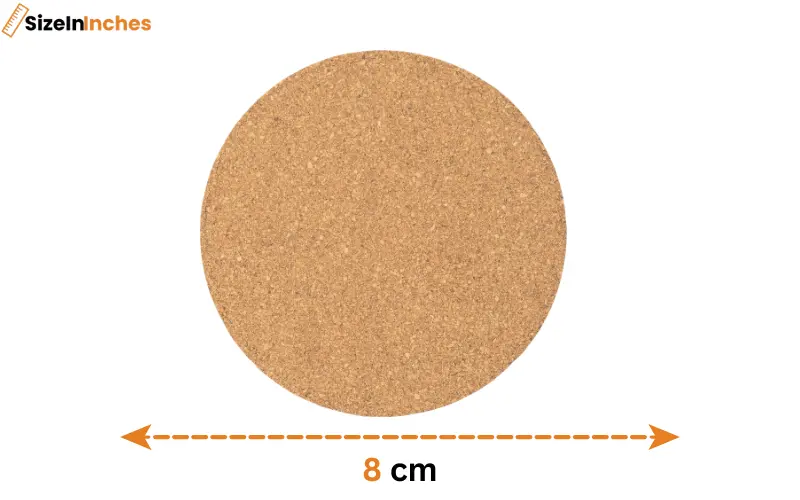
Kitchenware manufacturers produce 80 mm round cork trivets designed to support small mugs, teacups, espresso pots, and heat-resistant serving dishes. The diameter is standardized so the trivet provides stable support while protecting tabletops from heat and moisture.
These cork pads are commonly found in kitchens, coffee stations, cafés, and office break rooms. Their lightweight yet durable construction makes them a practical everyday household item.
Viewed from above, the circular cork surface clearly shows the full 8 cm measurement. The simple design makes it easy to compare with cups, bowls, and other kitchen accessories.
Because manufacturers publish the exact dimensions, an 80 mm cork trivet is another reliable example of things that are 8 cm.
Where You May See 8 cm in Daily Life
An 8 cm measurement appears more often than many people realize. It’s commonly used in products that need to be compact while still providing enough surface area to perform their intended function.
For example, many plumbing fittings, ventilation components, and workshop accessories are manufactured around this size because it offers a practical balance between strength and portability. In the kitchen, items like silicone lids and cork trivets frequently use an 80 mm diameter to fit small containers and cups.
Garden supplies also make regular use of this measurement. Small plant saucers, decorative accessories, and compact gardening tools are often produced in 8 cm sizes because they’re suitable for indoor plants and limited spaces.
Once you become familiar with a few real examples, recognizing 8 centimeters becomes much easier. Instead of imagining the number itself, you’ll naturally compare it with familiar household items you’ve already seen or used.
How to Measure 8 cm Without a Ruler
If you don’t have a ruler nearby, there are still several simple ways to estimate 8 cm accurately.
One of the easiest methods is to compare the object with another item that has a published 80 mm specification. Products such as an 80 mm silicone lid, 80 mm hole saw, or 80 mm plant pot saucer all have standardized dimensions, making them reliable reference points.
You can also use a ruler on your smartphone if you have a measuring app installed. Many modern phones include augmented reality measuring tools that provide quick estimates for small objects. While they may not be as accurate as a physical ruler, they’re usually close enough for everyday tasks.
Another option is to become familiar with the appearance of 8 centimeters by measuring it a few times using a standard ruler. Once you’ve seen the length repeatedly, your brain begins to recognize it naturally, making future estimates much easier.
Whenever precision matters—such as woodworking, engineering, or crafting—it’s always best to verify the measurement with a ruler or tape measure. However, for everyday shopping, organizing, or comparing objects, these simple techniques are often more than sufficient.
More Size Guides You Might Find Helpful
FAQs
How long is 8 cm in inches?
8 cm equals 3.15 inches. To convert centimeters to inches, divide the number of centimeters by 2.54. This conversion is useful when comparing products that use different measurement systems.
What does 8 cm look like?
An 8 cm measurement is about the diameter of an 80 mm silicone lid, 80 mm plant pot saucer, or 80 mm round air vent cover. Comparing the measurement with real objects makes it much easier to picture than simply reading the number.
Is 8 cm considered big or small?
Eight centimeters is considered a small to medium-sized measurement. It is larger than many everyday accessories but still compact enough to fit comfortably in one hand. This size is commonly used for kitchen accessories, plumbing fittings, and craft supplies.
How tall is 8 cm?
If an object is 8 cm tall, its height equals 80 millimeters or approximately 3.15 inches. Many small containers, decorative items, and household accessories fall within this height range.
What are some things that are 8 cm?
Examples of things that are 8 cm include an 80 mm hole saw, PVC end cap, round air vent cover, silicone stretch lid, plant pot saucer, sanding disc, cabinet rosette, wax seal stamp base, and round cork trivet. These products are manufactured with standardized dimensions, making them excellent references.
How can I measure 8 cm without a ruler?
One simple method is to compare the object with another item that has a published 80 mm measurement, such as an 80 mm silicone lid or 80 mm plant pot saucer. You can also use a smartphone measuring app for a quick estimate, although a physical ruler provides the most accurate results.
Is 8 cm bigger than 3 inches?
Yes. Three inches equals 7.62 centimeters, while 8 centimeters equals 3.15 inches. Although the difference is small, 8 cm is slightly longer than 3 inches.
Why do manufacturers use 8 cm measurements?
Many manufacturers choose 8 cm (80 mm) because it provides a practical balance between compact size and usability. It is large enough for products like plumbing fittings, kitchen accessories, ventilation components, and craft supplies while remaining easy to store, handle, and transport.
Conclusion
Knowing how big is 8 cm becomes much easier when you compare the measurement with real-world objects instead of relying only on numbers. Everyday items like an 80 mm silicone stretch lid, 80 mm plant pot saucer, or 80 mm hole saw provide accurate visual references because their dimensions are standardized by manufacturers.
Whether you’re shopping online, planning a DIY project, replacing household parts, or simply satisfying your curiosity, understanding 8 centimeters helps you judge product sizes more confidently. Once you’ve seen a few familiar 8 cm examples, estimating similar measurements in everyday life becomes much quicker and more accurate.