Imagine you’re buying a replacement cabinet knob, a camera accessory, or a piece of jewelry online. The product description says it’s 6 cm big, but unless you have a ruler nearby, it’s difficult to know whether that’s larger or smaller than you expect. A simple number doesn’t always create a clear picture.
This is one reason many people look up measurements using everyday comparisons rather than unit conversions. Seeing a real object with the same dimensions makes a measurement easier to understand and far easier to remember than reading “60 millimeters” on its own.
In this guide, you’ll learn how big is 6 cm, see how it compares to familiar objects, discover things that are 6 cm, and find practical ways to estimate 6 centimeters in daily life. Whether you’re shopping online, measuring a small space, or checking product dimensions, this article will help you visualize the measurements with confidence.
📏 6 cm at a Glance
A length of 6 centimeters equals 60 millimeters, 2.36 inches, 0.06 meters, or 0.196 feet.
Quick Answer: 6 cm is a compact measurement equal to 60 millimeters or 2.36 inches. It’s a size commonly found in camera accessories, hardware, craft supplies, and other everyday products with standardized dimensions.
6 cm Conversion Table
| Unit | Value |
| Millimeters | 60 mm |
| Inches | 2.36 in |
| Meters | 0.06 m |
| Feet | 0.196 ft |
Millimeters are widely used in engineering, manufacturing, and technical drawings. Inches are common in the United States, while centimeters and meters are used throughout most of the world for everyday measurements.
Why You See 6 cm More Often Than You Realize
Many everyday products are designed within a narrow size range so they’re comfortable to hold, easy to store, and practical to manufacture. Six centimeters falls into that range, making it a surprisingly common measurement across different industries.
You’ll find products measuring 6 centimeters in photography equipment, household hardware, sporting goods, laboratory supplies, and home improvement materials. While you may never notice the measurement itself, designers frequently choose this size because it offers a balance between compactness and usability.
This is why learning how long is 6 cm isn’t only useful for school or mathematics. It also helps when comparing products online, choosing replacement parts, or checking whether something will fit into a limited space.
Visualizing 6 cm Without Picking Up a Ruler
Most people don’t carry a ruler with them, so it’s useful to recognize 6 cm size using familiar visual references.
Picture a standard ruler. Starting from the zero mark, move your eyes to the number six. That short distance represents 6 centimeters, or 60 millimeters. Although it sounds small, it’s noticeably longer than many people imagine when they first hear the number.
Another way to picture it is on a sheet of notebook paper. Six centimeters occupies only a small portion of the page, yet it’s long enough to cover several printed words in a sentence. It also fits comfortably across part of your palm without reaching from one side to the other.
You can also compare it to the width of several adult fingers placed together. While finger sizes differ from person to person, this provides a quick mental reference when you don’t have measuring tools nearby.
The more often you connect measurements with real-world objects, the easier it becomes to estimate size accurately without relying on numbers alone.
10 Things That Are Exactly 6 cm
Every object below is based on published product specifications, official standards, or manufacturer dimensions to help you understand what does 6 cm look like in real life.
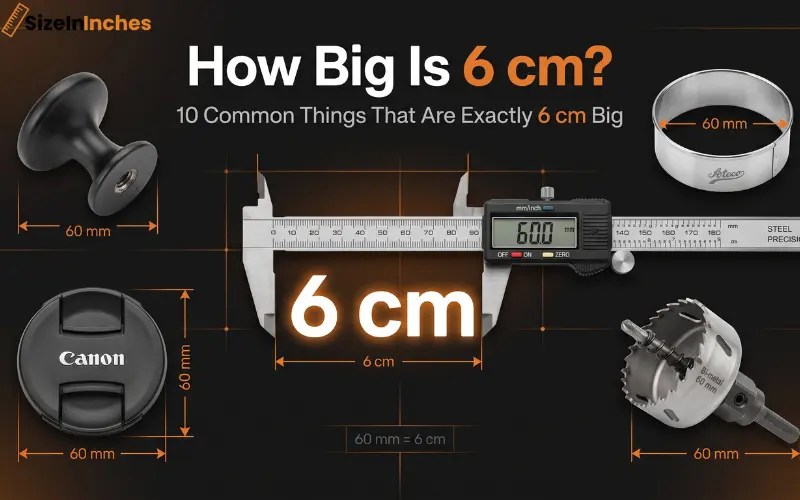
1. IKEA ENERYDA Cabinet Knob (60 mm)
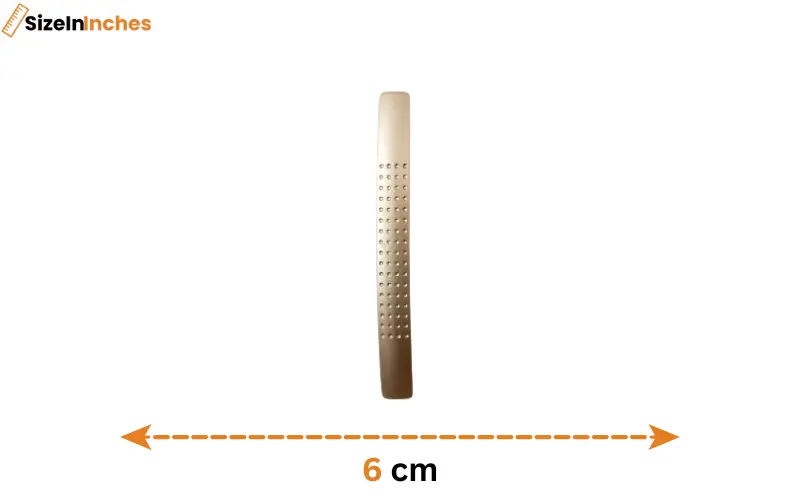
The IKEA ENERYDA knob is available in an exact 60 mm diameter version according to IKEA’s published product specifications. Because the measurement is provided by the manufacturer, it serves as a reliable real-world reference for understanding 6 centimeters.
You’ll find this cabinet knob on kitchen cabinets, bathroom vanities, wardrobes, and dressers in modern homes. It’s also displayed in IKEA stores and online catalogs, making it easy for shoppers to compare sizes before purchasing.
When you hold the knob, it feels solid, rounded, and comfortable to grip. The circular face is large enough to stand out visually without appearing oversized, making its dimensions easy to appreciate.
Seeing a 60 mm cabinet knob in person provides an accurate mental picture of how long is 6 cm without needing a ruler.
This is one of the most practical things that are 6 cm because its size is verified by the manufacturer’s published specifications.
2. Canon E-60 Camera Lens Cap
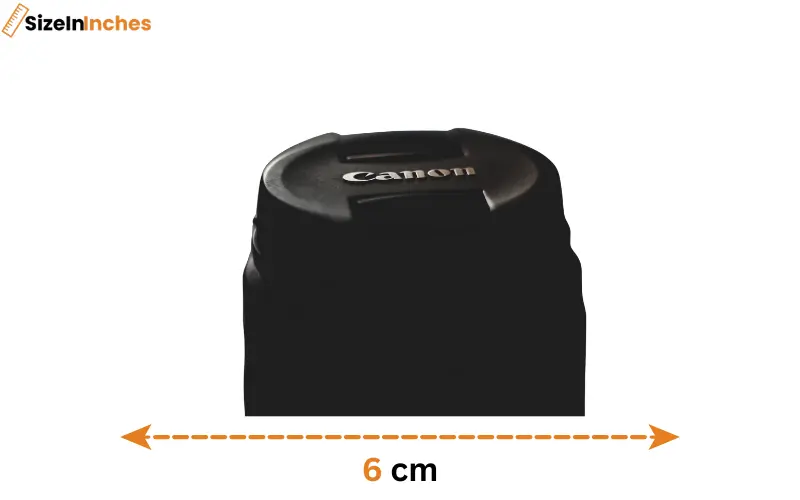
Canon manufactures the E-60 lens cap specifically for camera lenses with a 60 mm filter thread. The product name itself reflects the filter size, making it a reliable measurement reference.
Photographers encounter this accessory when protecting camera lenses from dust, scratches, and fingerprints. It’s commonly sold with Canon lenses or as a replacement accessory through camera retailers.
The cap fits comfortably in your palm and has a shallow circular design with two center-release tabs that make it easy to attach and remove.
Because its diameter corresponds to 60 mm, it’s an excellent real-world example of 6 centimeters.
3. Ateco 60 mm Round Cookie Cutter
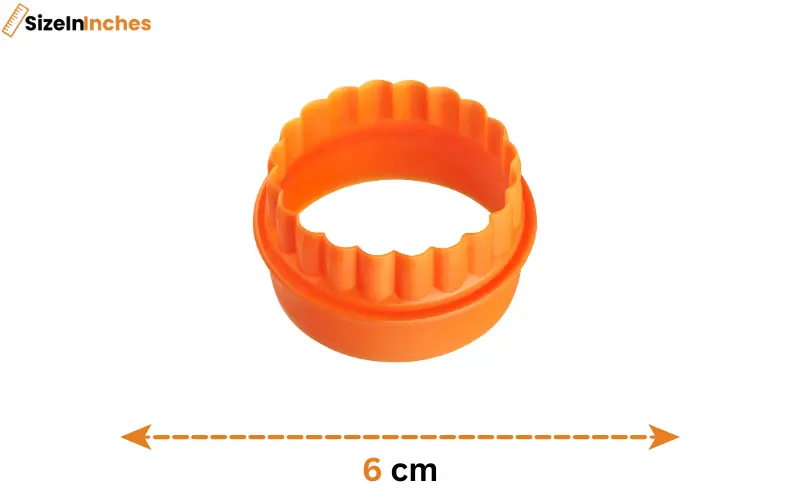
The Ateco round cookie cutter is manufactured in an exact 60 mm diameter, with the measurement listed in the company’s product specifications. Professional bakers use standardized cutter sizes to produce consistent cookies, biscuits, pastries, and fondant decorations.
You’ll find this cutter in home kitchens, commercial bakeries, culinary schools, and baking supply stores. It’s a popular tool for anyone preparing evenly sized baked goods for recipes or decorative work.
The stainless-steel cutter feels lightweight with a smooth, perfectly round edge. Looking through the center immediately shows the full 6 cm diameter, making it easy to compare with other household objects.
Because the cutting edge forms an exact circle, it offers a simple way to understand what does 6 cm look like in everyday use.
The Ateco 60 mm cookie cutter is one of the clearest examples of things that are 6 cm.
4. 60 mm Hole Saw Cutter
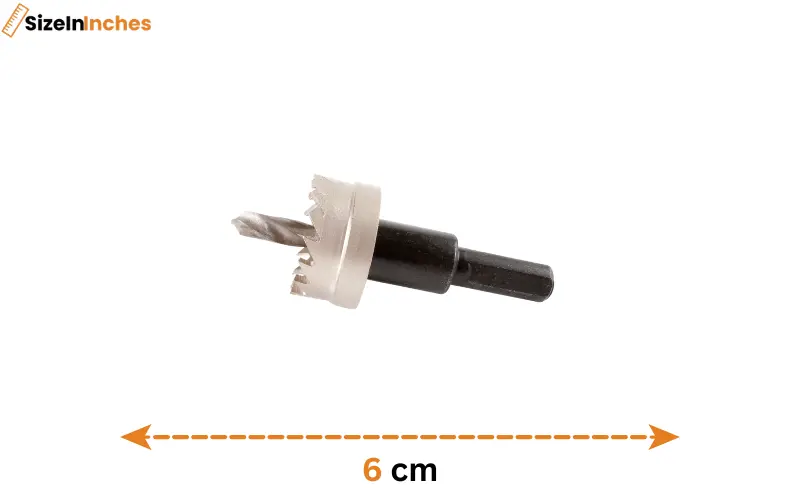
Power tool manufacturers such as Bosch, Milwaukee, and Makita produce 60 mm hole saws for drilling precise circular openings through wood, plastic, and other materials.
You’ll find these cutters in workshops, construction sites, and home improvement projects where electricians and carpenters install pipes, cables, or recessed fixtures.
The cutting edge forms a perfect circle, making the diameter easy to compare with other household objects.
If you’ve ever seen a 60 mm hole saw, you’ve already seen an accurate example of 6 cm size.
5. 60 mm Sanding Disc
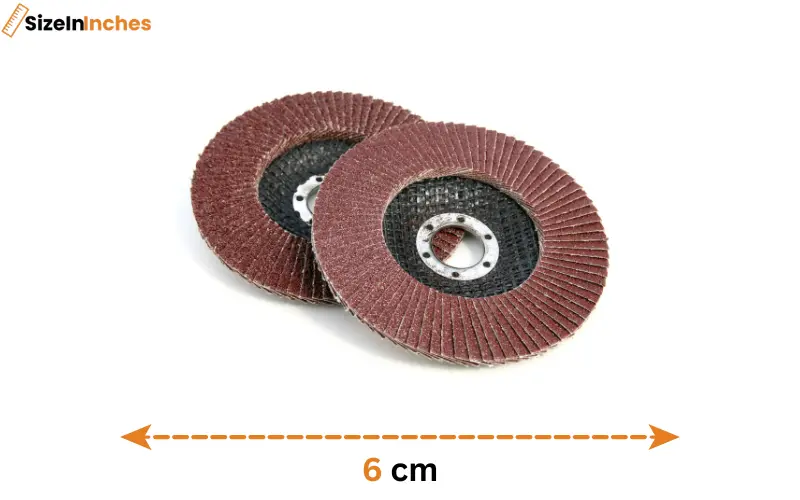
Many rotary tools and detail sanders use 60 mm sanding discs manufactured for fine finishing work on wood, metal, and plastic surfaces.
These sanding discs are commonly available through Bosch, 3M, Dremel-compatible accessory manufacturers, and professional woodworking suppliers.
The disc feels thin and lightweight but has a clearly defined circular shape that makes its measurement easy to recognize. Craftsmen frequently replace these discs during precision sanding projects because the standardized size fits compatible backing pads.
Looking at one provides another accurate visual reference for what does 6 cm look like, especially when thinking about circular measurements.
6. 60 mm Wooden Craft Disc
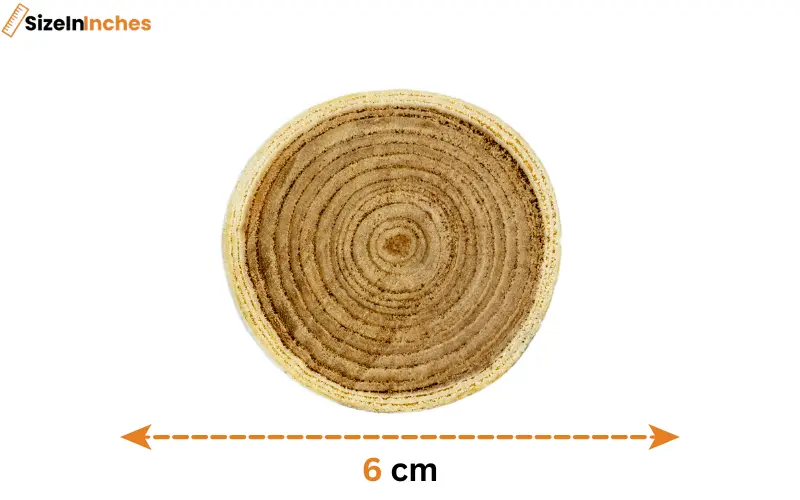
Wooden craft discs are sold in exact 60 mm diameters by major craft suppliers for painting, engraving, laser cutting, ornaments, and DIY projects. The product size is clearly listed by manufacturers, making it a dependable measurement reference.
You’ll find these wooden circles in craft stores, hobby shops, school art departments, and online marketplaces. They are widely used for personalized signs, holiday decorations, coasters, and handmade gifts.
Holding one feels smooth and lightweight with a perfectly round shape that is easy to compare against your palm or a ruler. Its flat surface also makes the diameter immediately visible from any angle.
Since the disc is manufactured to a published 60 mm size, it provides an excellent visual reference for how long is 6 cm.
If you’re looking for practical 6 cm size examples, a 60 mm wooden craft disc is one of the easiest objects to picture.
7. 60 mm Furniture Leg Pad
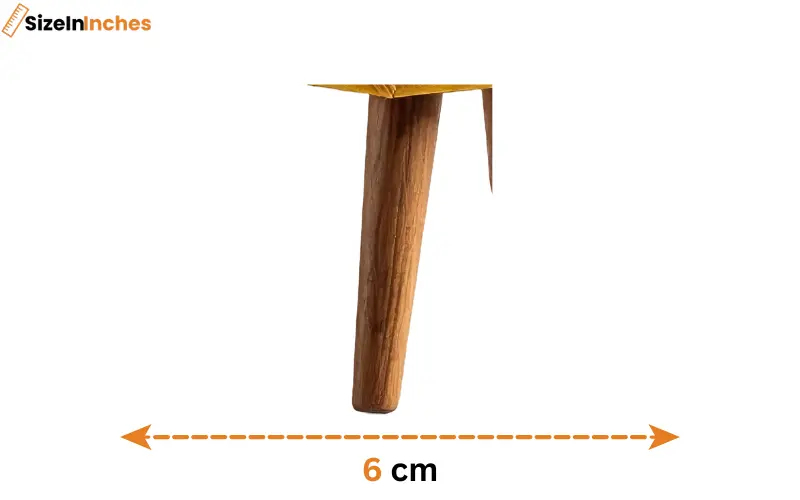
Furniture hardware manufacturers sell protective floor pads in standardized diameters, including 60 mm versions designed for larger chairs, tables, and cabinets. The measurement is listed directly in the product specifications so buyers can choose the correct size.
You’ll commonly see these pads underneath dining tables, office desks, sofas, and heavy wooden furniture. They protect hardwood floors from scratches while reducing movement and vibration.
The pad feels flat with a broad circular shape. Although it’s only a few millimeters thick, its diameter is easy to recognize because it occupies a noticeable area beneath a furniture leg.
This makes it another practical example of things that are 6 cm.
8. 60 mm Silicone Jar Seal
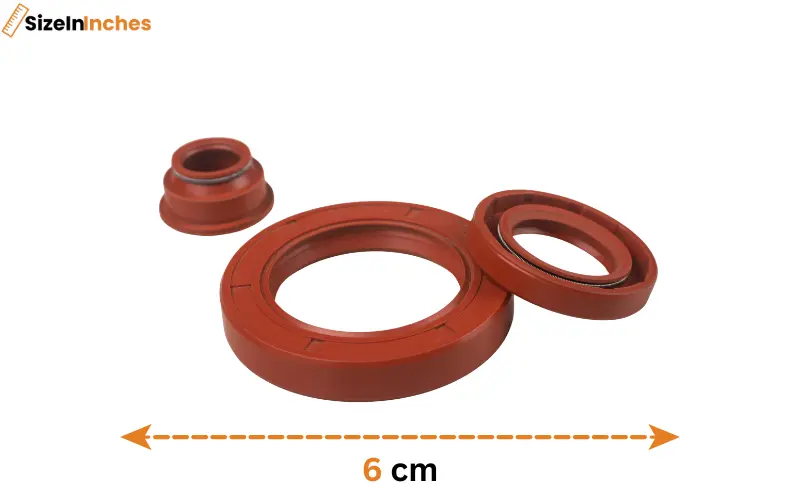
Many food-storage containers and preserving jars use 60 mm silicone replacement seals. Manufacturers specify the exact diameter to ensure an airtight fit with compatible lids.
These seals are available from kitchenware suppliers, home canning stores, and replacement-part retailers. They’re commonly used by people who preserve homemade jams, sauces, pickles, and dry food.
The flexible silicone ring feels soft and slightly stretchy while maintaining a perfectly round shape. Because the diameter is fixed by the lid design, it’s an excellent object for understanding 6 centimeters.
Seeing one installed inside a jar lid gives a realistic impression of 6 cm size in everyday kitchen equipment.
9. 60 mm Watch Case
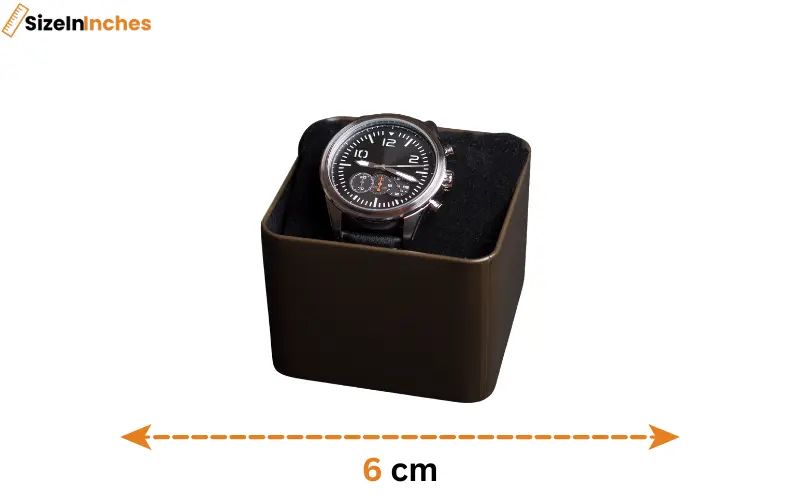
Some oversized men’s watches are manufactured with a 60 mm case diameter, and premium watch brands clearly publish these dimensions in their technical specifications.
These watches are popular among collectors, outdoor enthusiasts, and people who prefer bold wristwear. Large-dial watches are often displayed in jewelry stores and online watch catalogs where precise measurements are important.
Holding a watch of this size immediately shows how much space 6 centimeters occupies. The face appears significantly larger than a standard wristwatch, making the diameter easy to visualize.
This makes a 60 mm watch case one of the easiest personal accessories to understand when learning what does 6 cm look like.
10. 60 mm Camera Filter
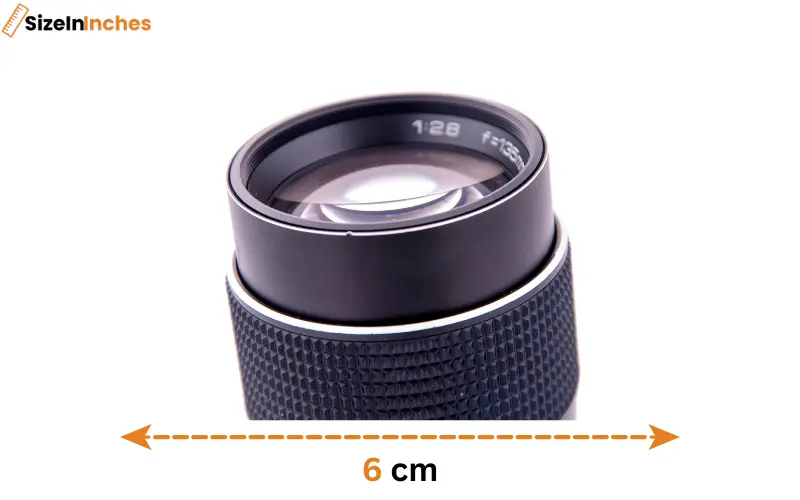
Photography equipment manufacturers produce 60 mm camera filters designed to fit compatible lenses. The filter diameter is printed directly on both the packaging and the filter ring, making it a published measurement rather than an estimate.
You’ll find these filters in camera stores, photography studios, and the equipment bags of professional photographers. UV filters, CPL filters, and ND filters all use standardized diameters.
The filter is made from thin optical glass surrounded by a lightweight metal ring. Looking straight through it creates a perfect circle, making the 60 mm diameter very easy to appreciate visually.
For photographers, this is one of the clearest examples of how long is 6 cm.
Where You’ll Notice 6 cm in Everyday Life
Even if you never think about centimeters, 6 cm appears in products you interact with every day. Camera accessories, plumbing fittings, furniture hardware, laboratory equipment, and kitchen supplies all rely on standardized dimensions to ensure compatibility. That’s why this measurement shows up across many different industries.
You may also encounter 6 centimeters while shopping online. Product listings frequently include dimensions to help buyers understand the actual size before making a purchase. Knowing what 6 cm looks like can prevent ordering an item that turns out to be much larger or smaller than expected.
Home improvement projects are another common example. Whether you’re replacing a pipe fitting, choosing a hole saw, or buying replacement furniture accessories, recognizing 6 cm size makes it easier to compare products and select the right part without second-guessing.
Comparing 6 cm with Other Common Measurements
5 cm vs 6 cm
One extra centimeter may not sound significant, but it creates a noticeable difference in real life. A 6 cm object has more surface area and is easier to grip than something measuring 5 cm. That extra length becomes obvious when comparing circular objects such as lids, filters, or sanding discs.
6 cm vs 7 cm
A 7 cm object extends another centimeter beyond 6 cm, making it appear slightly larger without feeling oversized. This difference is easy to notice in products like watch cases, decorative hardware, and container lids.
6 cm vs 10 cm
Ten centimeters is substantially longer than 6 cm. While 6 cm comfortably fits within part of your palm, 10 cm stretches much farther and begins approaching the length of many handheld tools. Comparing the two helps you judge product dimensions more accurately when shopping.
How to Measure 6 cm Without a Ruler
If you don’t have a ruler nearby, there are still several practical ways to estimate 6 cm with reasonable accuracy.
One method is to use a familiar object with a known measurement. For example, if you own a 60 mm camera filter, a 60 mm Petri dish, or another standardized item mentioned in this guide, you already have a reliable reference. Comparing another object against it provides a quick visual estimate.
Another option is to use your hand. Although finger sizes differ between individuals, several fingers placed together create a width that can help estimate short distances. This method won’t replace an actual ruler, but it’s useful when making quick comparisons while shopping or working around the house.
The most accurate method is still using a ruler correctly. Place the object at the 0 cm mark rather than the edge of the ruler, then read the measurement at the opposite end. Beginners sometimes start measuring from the ruler’s physical edge instead of the printed zero line, which can produce inaccurate results. Reading directly from the centimeter scale ensures you measure 6 centimeters correctly every time.
More Size Guides on Sizeininches
FAQs
How long is 6 cm in inches?
Six centimeters equals 2.36 inches. This conversion is commonly used when comparing metric and imperial measurements, especially for products sold internationally. Knowing both values makes shopping and measuring much easier.
What does 6 cm look like?
A 6 cm measurement is similar to the diameter of several standardized products, including camera filters and laboratory Petri dishes. Seeing these objects in person gives a much clearer understanding than reading a number alone.
Is 6 cm considered small?
Yes. Six centimeters is generally considered a compact measurement. It’s large enough to hold comfortably in your hand while remaining small enough for many accessories, tools, and household products.
How can I measure 6 cm without a ruler?
The easiest method is to compare the object with another item that has a published 60 mm dimension. If no reference object is available, using your hand provides a rough estimate until you can verify the measurement with a ruler.
What are common things that are 6 cm?
Examples include 60 mm Petri dishes, camera filters, lens caps, furniture pads, PVC pipe end caps, sanding discs, and hole saws. These products have manufacturer-published specifications, making them reliable references.
Why are many products made in 6 cm sizes?
Manufacturers use standardized dimensions because they improve compatibility between components. Products like filters, fittings, and hardware must match precisely, so fixed measurements such as 60 mm are widely adopted.
Is 6 cm bigger than 2 inches?
Yes. Two inches equals 5.08 cm, while 6 cm equals 2.36 inches. That means 6 centimeters is noticeably longer than exactly two inches.
Is 60 mm the same as 6 cm?
Yes. Since 1 centimeter equals 10 millimeters, multiplying 6 × 10 gives 60 millimeters. Both measurements describe the same length using different metric units.
Conclusion
Knowing how long 6 cm is becomes much easier when you connect the measurement with real products instead of relying on numbers alone. Objects such as a 60 mm Petri dish, a Canon E-60 lens cap, and a 60 mm hole saw provide reliable references because their dimensions are based on published specifications rather than estimates.
The next time you see 6 cm listed on a product page, you’ll have a much clearer idea of its actual size. Whether you’re shopping online, completing a DIY project, or comparing product dimensions, these visual references make the measurement practical and easy to remember.