Imagine you’re replacing a cabinet handle, ordering a cookie cutter for baking, or buying a camera accessory online. The product description says it measures 7 cm, but without something to compare it to, it’s difficult to know whether that’s the right size. A simple measurement rarely creates a clear picture in your mind.
That’s why everyday objects are so useful. Instead of trying to visualize centimeters from a number alone, comparing the measurement with familiar products helps you understand its actual size much faster. It also makes future estimates easier because you’ll remember the object instead of memorizing the number.
In this guide, you’ll discover how big is 7 cm, learn how long is 7 cm, explore 11 things that are 7 cm, compare 7 cm in inches, and find practical ways to recognize 7 centimeters in everyday life.
📏 7 cm at a Glance
Wondering how big is 7 cm? A length of 7 centimeters equals 70 millimeters, 2.76 inches, 0.07 meters, and 0.23 feet.
7 cm
Centimeters
70 mm
Millimeters
2.76 in
Inches
0.23 ft
Feet
Quick Answer: A measurement of 7 cm is equal to 70 mm, 2.76 inches, 0.07 meters, and 0.23 feet. It is slightly less than 3 inches long and is a common size for items like cookie cutters, camera filters, and craft discs.
7 cm Conversion Table
| Unit | Value |
| Millimeters | 70 mm |
| Inches | 2.76 in |
| Meters | 0.07 m |
| Feet | 0.23 ft |
Millimeters are widely used in engineering and manufacturing because they provide greater precision. Inches remain common in the United States, while centimeters are the standard unit for everyday measurements across most countries.
Why Knowing the Size of 7 cm Is More Useful Than You Think
Many products list their dimensions in centimeters, but those numbers don’t always help you understand how large an item really is. Whether you’re shopping online, planning a DIY project, or choosing a replacement part, knowing the actual size behind the measurement can prevent costly mistakes.
A 7 cm measurement appears in many different industries because it’s practical without taking up much space. From kitchen tools and camera accessories to decorative hardware and craft materials, manufacturers frequently produce products with this dimension because it’s comfortable to handle and easy to store.
Learning to recognize 7 cm size also improves your ability to estimate other measurements. Once you become familiar with a reliable 7-centimeter reference, comparing larger or smaller objects becomes much easier without needing a measuring tape every time.
What Does 7 cm Look Like?
If you place a ruler on a table and measure from the 0 cm mark to the 7 cm mark, you’ll notice the distance is slightly less than 3 inches. It isn’t large enough to stretch across your entire hand, but it’s much longer than many people first imagine when they hear “seven centimeters.”
Another easy way to picture the measurement is by looking at common items around your home. A medium-sized kitchen accessory, a decorative cabinet knob, or a camera filter can all provide useful visual references when their dimensions are published by the manufacturer.
Instead of memorizing the number itself, focus on recognizing the overall length. Once you’ve handled several objects measuring 7 centimeters, estimating similar sizes becomes much more natural.
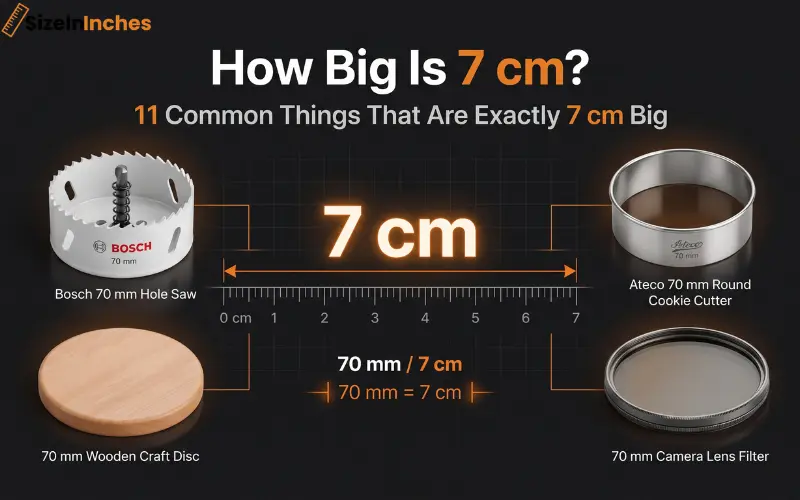
11 Things That Are Exactly 7 cm Big
Every object below has a manufacturer-published dimension or product specification to provide an accurate reference for understanding 7 centimeters.
1. Bosch 70 mm Hole Saw
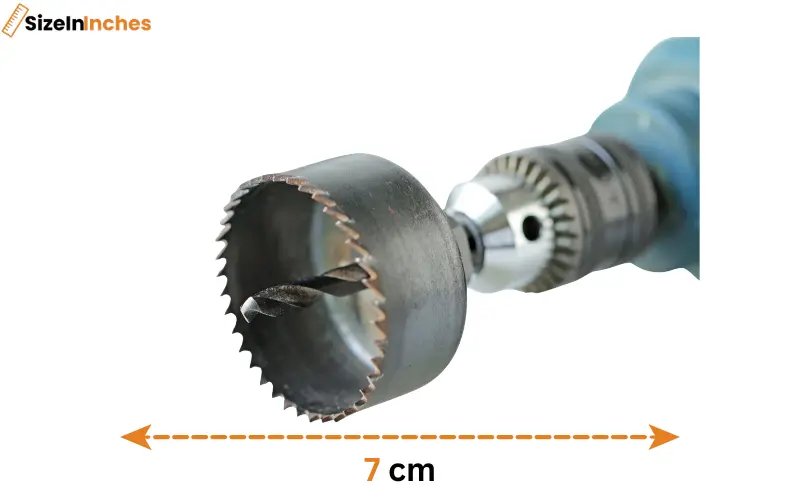
Bosch manufactures 70 mm hole saws for cutting precise circular openings in wood, plastic, drywall, and other materials. The 70 mm cutting diameter is listed in the company’s official product specifications, making it a dependable reference for understanding 7 centimeters.
You’ll find this tool in professional workshops, construction sites, hardware stores, and home improvement centers. Electricians, plumbers, and carpenters regularly use 70 mm hole saws when installing lighting fixtures, ventilation ducts, and pipe openings.
When you hold one, the circular cutting edge immediately shows how much space 7 cm covers. It’s noticeably larger than most household lids while remaining compact enough to fit comfortably in one hand.
Because the diameter is precisely manufactured, this tool provides one of the clearest examples of what 7 cm is.
If you’re looking for reliable things that are 7 cm, a 70 mm hole saw is an excellent choice.
2. Ateco 70 mm Round Cookie Cutter
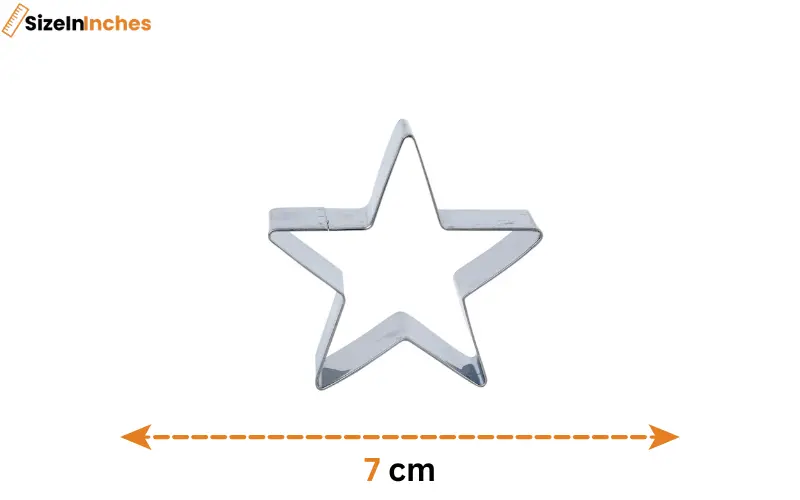
Ateco produces professional baking tools in standardized sizes, including a 70 mm round cookie cutter. The diameter is published in the manufacturer’s product specifications, ensuring consistent baking results every time it’s used.
You’ll find this cutter in commercial bakeries, restaurant kitchens, culinary schools, and home baking collections. It’s commonly used for cookies, biscuits, pastry dough, fondant, and decorative desserts where uniform sizing is important.
The stainless-steel ring feels lightweight with a smooth circular edge that clearly displays the full 7 cm diameter. Looking through the center also makes it easy to compare with other kitchen tools nearby.
Since the cutter is manufactured to an exact specification, it’s a practical way to understand what 7 cm looks like without relying on a ruler.
The 70 mm cookie cutter is one of the easiest 7 cm size references found in everyday kitchens.
3. 70 mm Wooden Craft Disc
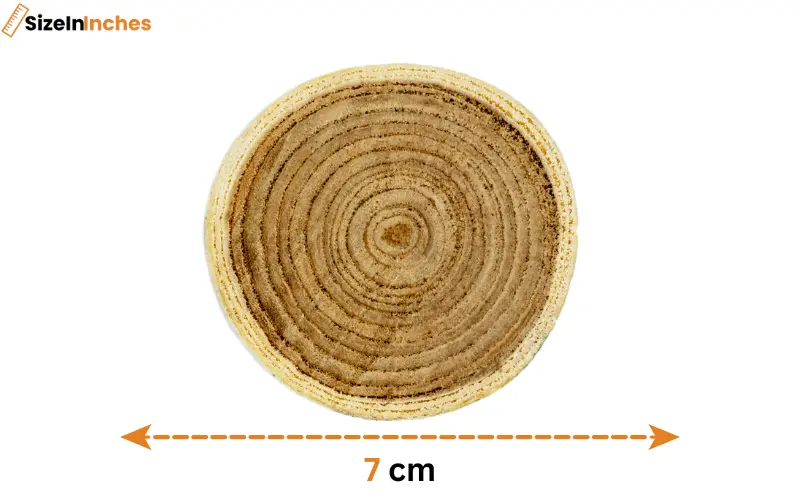
Wooden craft discs are manufactured in standard diameters for painting, engraving, laser cutting, and decorative projects. One of the most popular sizes sold by craft suppliers is the 70 mm wooden disc, making it a reliable measurement reference.
These wooden circles are widely available in hobby stores, school art departments, DIY workshops, and online craft marketplaces. They are used for ornaments, personalized signs, coasters, wedding decorations, and educational projects.
When you hold the disc, its smooth circular shape makes the diameter immediately noticeable. The flat surface provides an easy way to compare 7 centimeters against your hand or another object.
Because manufacturers clearly list the 70 mm size, this craft disc offers a dependable visual example of how long is 7 cm.
If you enjoy DIY projects, this is one of the most recognizable things that is 7 cm.
4. 70 mm Camera Lens Filter
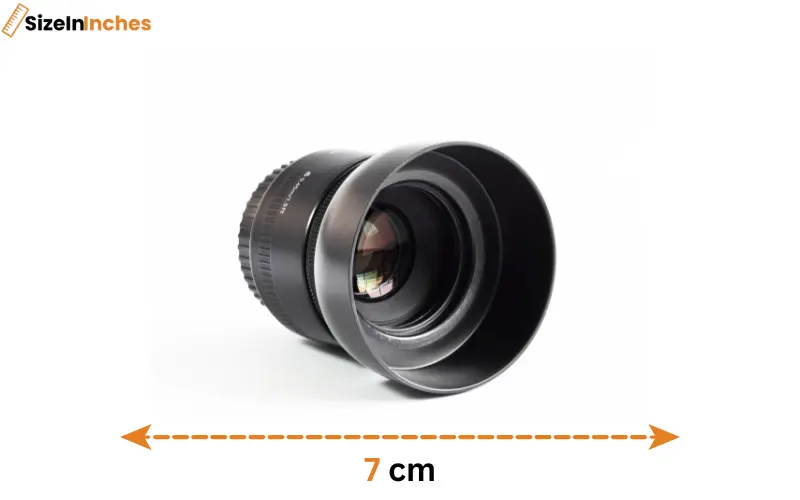
Photography equipment manufacturers produce 70 mm camera filters for compatible lenses. Whether it’s a UV filter, circular polarizer, or neutral density filter, the diameter is printed directly on the product and packaging to ensure compatibility.
Photographers use these filters to protect lenses, reduce reflections, improve color, or control light entering the camera. You’ll commonly see them in photography studios, camera stores, and equipment bags carried by professionals and enthusiasts.
The filter consists of a thin glass element surrounded by a lightweight metal ring. Looking directly through the circular opening gives you a perfect visual representation of a 7 cm diameter.
Because camera filters must match precise lens sizes, they provide an accurate way to understand 7 centimeters.
For photography enthusiasts, a 70 mm camera filter is an excellent real-world example of how big is 7 cm.
5. 70 mm Silicone Jar Replacement Seal
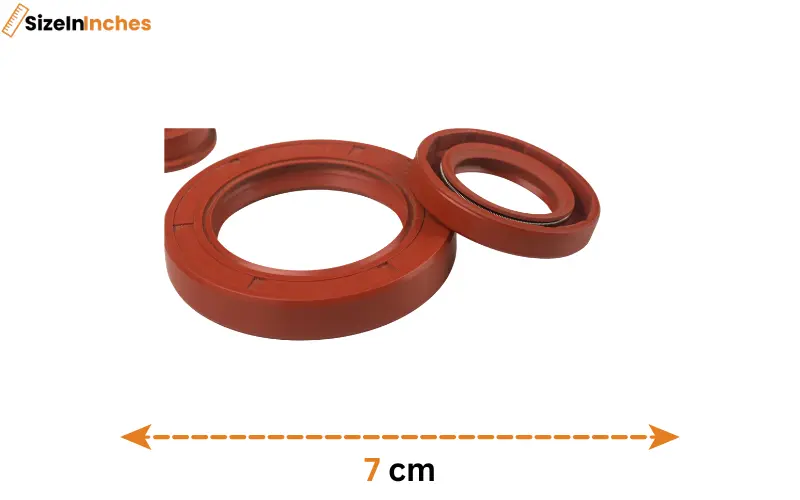
Many food storage and preserving jars use 70 mm silicone replacement seals to create an airtight closure. Manufacturers publish the exact diameter so buyers can purchase the correct replacement without guessing.
You’ll commonly find these seals in home kitchens, food preservation kits, and canning supplies. People who make homemade jams, sauces, pickles, or dry food storage rely on the correct seal size to prevent air from entering the jar.
The seal feels soft, flexible, and perfectly round. Even though it’s lightweight, the circular shape immediately gives you a clear sense of how much space 7 centimeters covers.
Since the measurement is specified by the manufacturer, this is a dependable example of how long is 7 cm.
If you’re looking for practical things that are 7 cm, a 70 mm silicone jar seal is an excellent reference.
6. 70 mm Circular Acrylic Blank
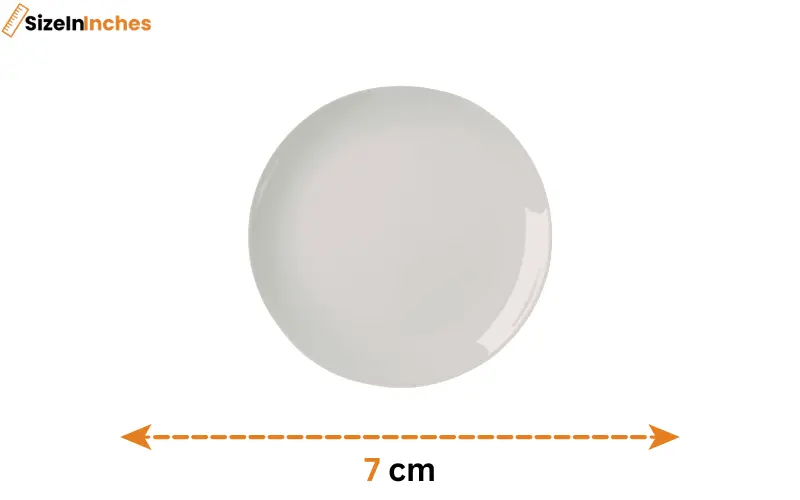
Laser-cut acrylic blanks are manufactured in standard diameters, including 70 mm, for engraving, vinyl decals, keychains, and decorative signs. Craftables and Acrylic Genius both sell laser-cut acrylic blanks in exact 70 mm diameters, making them reliable references for this measurement.
These acrylic circles are popular among small business owners, hobbyists, and sign makers. You’ll often see them used to create custom ornaments, wedding favors, product tags, and personalized gifts.
When you hold one, the smooth transparent surface makes its diameter easy to judge from every angle. The rigid acrylic also gives the object a clean and professional appearance.
Because the size is factory-produced, a 70 mm acrylic blank offers an accurate way to visualize 7 centimeters.
It is one of the easiest craft-based examples of 7 cm size.
7. 70 mm Furniture Floor Protector
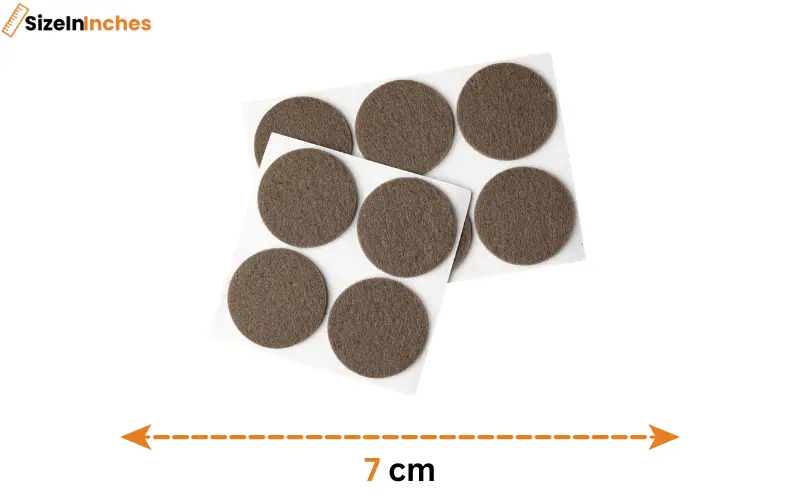
Furniture floor protectors are available in several standard diameters, including 70 mm, to fit larger chair legs, table bases, and decorative furniture. Manufacturers publish these dimensions so homeowners can select the correct size.
You’ll find these pads beneath dining tables, office furniture, sofas, and cabinets. Their primary purpose is to prevent scratches on hardwood, tile, and laminate flooring while reducing noise when furniture is moved.
The protector has a flat circular design that immediately displays its full diameter. Holding it against your palm makes it easy to appreciate the length of 7 centimeters.
This makes the 70 mm furniture floor protector another useful reference for what does 7 cm look like.
8. 70 mm Round Mirror Mosaic Tile
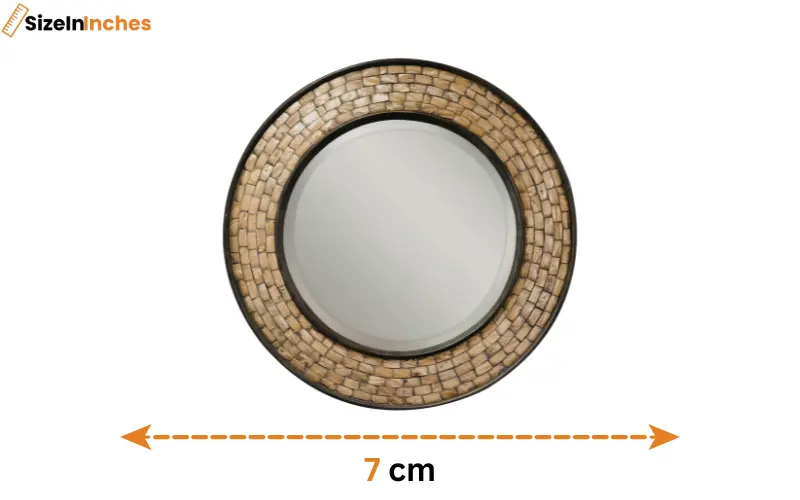
Decorative mirror mosaic tiles are manufactured in fixed diameters for interior decoration, with 70 mm being one of the available sizes offered by craft and tile suppliers. Suppliers like Mosaic Art Supply offer 70 mm round mirror tiles, making this another dependable real-world reference.
You’ll often see these round mirror tiles used on feature walls, decorative frames, furniture projects, and DIY home décor. Interior designers and craft enthusiasts use them because their consistent dimensions create balanced patterns.
The polished reflective surface makes the circular outline very noticeable. Even before measuring, the tile gives a strong visual impression of a 7 cm diameter.
Since the manufacturer specifies the size, it serves as another dependable example of 7 centimeters.
If you enjoy decorating your home, this is one of the most attractive things that are 7 cm.
9. 70 mm Leather Coaster Blank
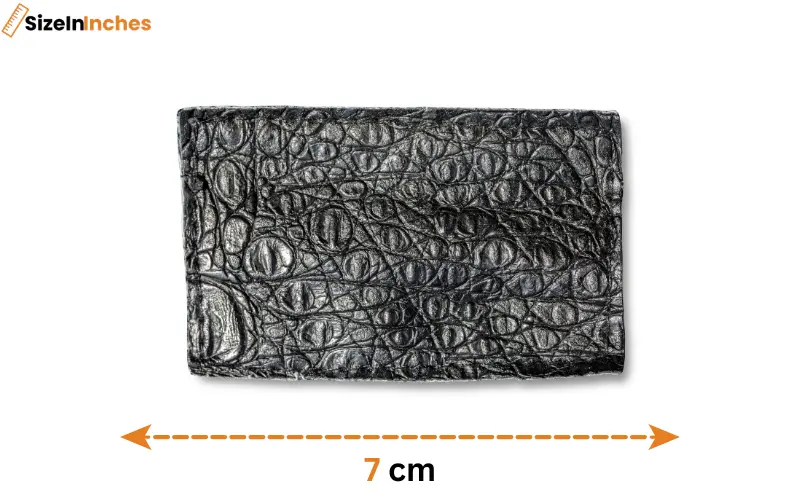
Leather craft suppliers manufacture circular coaster blanks in 70 mm diameters for engraving, stamping, and personalization. Springfield Leather Company sells pre-cut leather coaster blanks in 70 mm diameter, giving crafters a consistent and accurately sized material to work with.
These blanks are popular among leatherworkers, small craft businesses, and hobbyists creating custom drink coasters or decorative accessories.
The leather feels firm yet slightly flexible, while the smooth circular edge makes the diameter easy to compare with nearby objects. The size is comfortable to hold and provides a practical visual reference.
Because each blank is cut to an exact specification, it clearly demonstrates how big is 7 cm.
10. 70 mm Diameter Watch Case
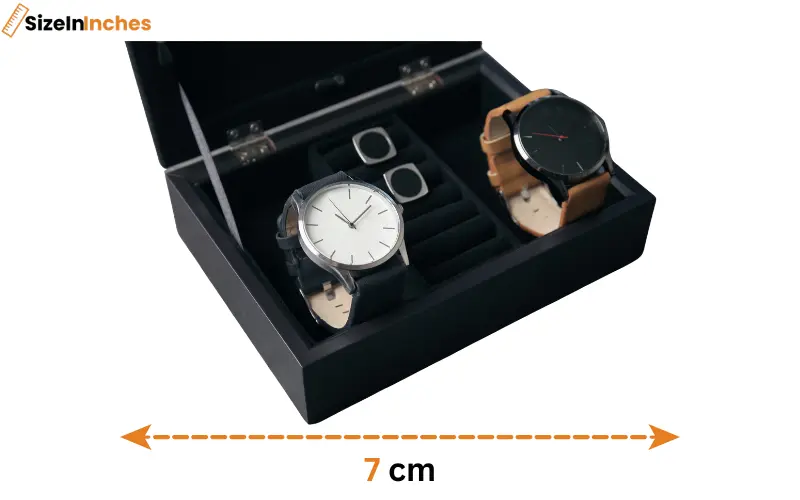
Some oversized sport and specialty watches are manufactured with 70 mm diameter cases for display models, rugged outdoor designs, and novelty timepieces. Manufacturers clearly publish the case diameter so buyers can understand the overall size before purchasing.
A 70 mm watch case is much larger than a standard wristwatch, making it an excellent visual reference for understanding 7 centimeters. Its wide circular shape is immediately noticeable and demonstrates how much space a 7 cm diameter occupies.
Collectors, watch enthusiasts, and retailers often use these oversized cases for display purposes because their larger size makes the watch easier to examine. The precisely machined metal housing also highlights the exact diameter from edge to edge.
Since the measurement is specified by the manufacturer, a 70 mm watch case provides another reliable example of how big is 7 cm in real life.
11. 70 mm Stainless Steel Blank Disc
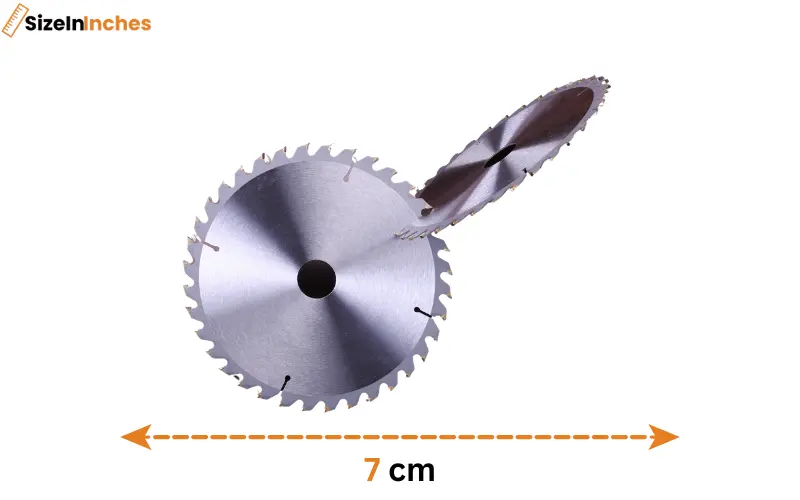
Industrial suppliers manufacture stainless steel blank discs in precise diameters, including 70 mm, for engineering, fabrication, testing, and custom manufacturing projects.
These discs are commonly used by metalworkers, machine shops, educational engineering programs, and fabrication companies where accurate dimensions are essential.
The polished metal surface feels solid and cool to the touch, while the perfectly machined edge highlights the exact diameter. Because of its rigid construction, it’s one of the easiest objects to compare visually.
A 70 mm stainless steel disc provides an accurate industrial reference for how long 7 cm is.
It is one of the strongest technical examples of things that are 7 cm.
How Big Is 7 cm?
In your hand, 7 cm feels solid and clearly noticeable. It covers most of your palm without reaching edge to edge, making it comfortable to grip and easy to examine. Objects at this size feel practical rather than tiny or oversized.
On a flat surface, 7 cm appears as a clearly defined length. Compared to a 5 cm object, it looks visibly larger and occupies more space. This is why so many everyday items like filters, cookie cutters, and craft discs are manufactured at this exact size.
How 7 cm Compares With Other Common Measurements
Understanding 7 cm becomes much easier when you compare it with familiar measurements instead of viewing it as an isolated number.
6 cm vs 7 cm
A difference of one centimeter may appear small on paper, but it becomes noticeable when holding two objects side by side. A 7 cm object provides slightly more grip and surface area than a 6 cm object, making the change easy to see in products like cookie cutters, furniture accessories, and craft materials.
7 cm vs 8 cm
An 8 cm object extends another centimeter beyond 7 cm, making it feel more substantial in your hand. While both measurements are compact, the extra length is noticeable when comparing circular objects such as acrylic blanks or decorative discs.
7 cm vs 10 cm
Ten centimeters is considerably larger than 7 cm. A 10 cm object occupies much more space on a tabletop and begins approaching the size of many handheld tools or decorative items. Comparing these two measurements helps you judge product dimensions more accurately while shopping online.
Practical Situations Where Knowing 7 cm Helps
Recognizing 7 centimeters isn’t only useful for school or mathematics. It’s a practical skill that can save time when comparing products or planning projects.
For example, online shopping often includes product dimensions but not visual comparisons. Understanding 7 cm size helps you judge whether a replacement cabinet accessory, decorative item, or craft supply will match your expectations before ordering.
DIY enthusiasts also benefit from knowing this measurement. Whether you’re selecting woodworking accessories, choosing baking tools, or creating handmade decorations, recognizing 7 cm allows you to estimate size quickly without measuring every object.
Even in photography, cooking, and home improvement, small differences in dimensions can affect compatibility. Building a mental picture of 7 centimeters helps you make faster and more confident decisions in everyday situations.
How to Measure 7 cm Without a Ruler
There are times when you need to estimate a measurement quickly but don’t have a ruler nearby. Whether you’re shopping online, checking the size of a small object, or working on a DIY project, knowing a few practical methods can help you judge 7 cm with reasonable accuracy.
Method 1: Compare It With a Standard 70 mm Object
One of the most reliable methods is to use an object with a published 70 mm specification. For example, a 70 mm camera filter, 70 mm cookie cutter, or 70 mm acrylic craft disc all have fixed manufacturer dimensions. If you own one of these items, simply compare the object you’re measuring against it. This provides a much more accurate estimate than guessing by eye because the reference object already has a verified measurement.
Method 2: Use Your Hand as a Quick Reference
Your hand can also help estimate short distances. While finger and palm sizes vary from person to person, placing several fingers together gives a useful visual guide for smaller measurements. After comparing your hand with a ruler a few times, you’ll develop a better sense of what 7 centimeters looks like. Although this method isn’t suitable for precision work, it works well when you need a quick estimate while shopping or organizing household items.
Method 3: Read a Ruler Correctly
Whenever possible, use a ruler for the most accurate measurement. Place one end of the object exactly at the 0 cm mark rather than the physical edge of the ruler. Then read the measurement at the opposite end. Many people accidentally begin measuring from the ruler’s edge instead of the printed zero line, which creates inaccurate results. Following the centimeter scale correctly ensures you’re measuring 7 cm precisely every time.
More size guides you might like
FAQs
How long is 7 cm in inches?
Seven centimeters equals 2.76 inches. This conversion is useful when comparing products that use both metric and imperial measurement systems. Knowing both units makes online shopping much easier, especially when buying products from international retailers.
What does 7 cm look like in real life?
A 7 cm measurement is similar to the diameter of a 70 mm cookie cutter, camera filter, or wooden craft disc. Looking at one of these objects provides a much clearer understanding than simply reading the number. Real-world comparisons make the measurement easier to remember.
Is 7 cm considered big or small?
Seven centimeters is generally considered a compact measurement. It is larger than many everyday accessories but still small enough to fit comfortably in one hand. This balance makes it a common size for household products, craft supplies, and photography equipment.
How tall is 7 cm?
If an object stands 7 centimeters tall, it reaches a height of 70 millimeters or 2.76 inches. This makes it suitable for many small containers, decorative items, and accessories where a compact design is important.
How can I measure 7 cm without a ruler?
The easiest approach is to compare the object with another item that has a published 70 mm specification, such as a camera filter or cookie cutter. You can also estimate the measurement using your hand after practicing with a ruler several times. For the highest accuracy, always verify the measurement using a ruler or measuring tape.
What are common things that are 7 cm?
Examples include 70 mm cookie cutters, camera filters, acrylic blanks, wooden craft discs, furniture protectors, silicone jar seals, and hole saws. These products are manufactured using published dimensions, making them dependable references for understanding 7 centimeters.
Is 7 cm bigger than 2 inches?
Yes. Since 2 inches equals 5.08 centimeters, 7 centimeters is noticeably longer. Understanding this difference helps when comparing products sold in different measurement systems.
What is the easiest way to picture 7 cm?
One of the easiest ways to picture 7 cm is to imagine a 70 mm round cookie cutter or a 70 mm camera filter. Both products are manufactured to exact specifications, making them reliable size references. Once you’ve handled one of these objects, recognizing 7 centimeters becomes much easier in everyday situations.
Conclusion
Visualizing how big is 7 cm becomes much easier when you compare the measurement with real products instead of trying to visualize numbers alone. Objects like a 70 mm cookie cutter, camera filter, and wooden craft disc provide reliable references because their dimensions are clearly published by manufacturers.
The next time you see 7 cm listed on a product page, you’ll have a much clearer idea of its actual size. Whether you’re shopping online, working on a craft project, choosing home accessories, or comparing product dimensions, these everyday examples make 7 centimeters easy to recognize and remember.