Standing in an open space, you might think you can judge distance easily. Then you try to estimate 40 feet—and suddenly it feels confusing, and you think how long is 40 feet exactly?
That’s because your brain doesn’t store measurements. It stores experiences. You remember the size of a bus, the height of a tree, or the distance across a road.
This guide focuses on those real references. Instead of memorizing numbers, you’ll connect 40 feet to things you’ve already seen.
How Long Is 40 Feet?
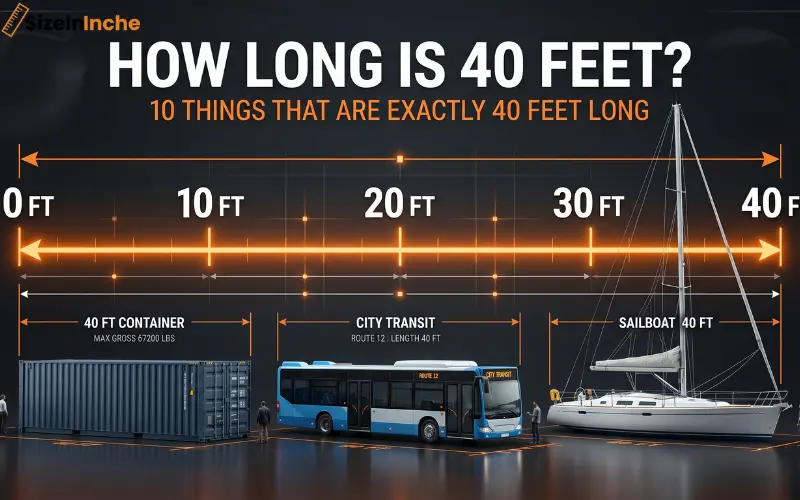
40 feet equals 480 inches, 1,219.2 centimeters, and 12.19 meters. It’s roughly the length of a city bus or a standard shipping container.
The Exact Size of 40 Feet (Quick Breakdown)
Here’s the precise conversion:
- 40 feet = 480 inches
- 40 feet = 1,219.2 cm
- 40 feet = 12.19 meters
- 40 feet = 13.33 yards
- 40 feet = 12,192 millimeters
This is the technical answer. But the real understanding comes from seeing it.
Walk It Out: A Simple Mental Test
Try this.
Take a normal step—not exaggerated. Count each one. By the time you reach 16 steps, you’ve covered almost exactly 40 feet.
Now pause and look back.
That distance you just walked? That’s not small. It’s enough to separate buildings, park large vehicles, or define space in construction.
Real-World Objects That Measure Exactly 40 Feet
1. ISO Freight Container
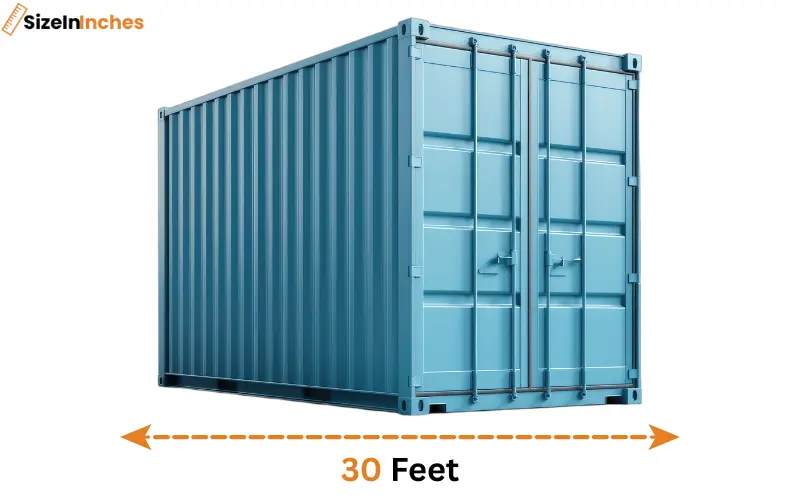
International shipping containers are manufactured at an exact length of 40 feet under ISO standards. This size is used globally for cargo movement across ships, trains, and trucks.
You’ll see these containers stacked at ports and rail yards. They form long rows of identical metal units.
Standing beside one feels like standing next to a long steel wall. It stretches far past your natural field of view.
This makes it one of the most accurate visual references for understanding how long is 40 feet.
2. Full-Length City Bus
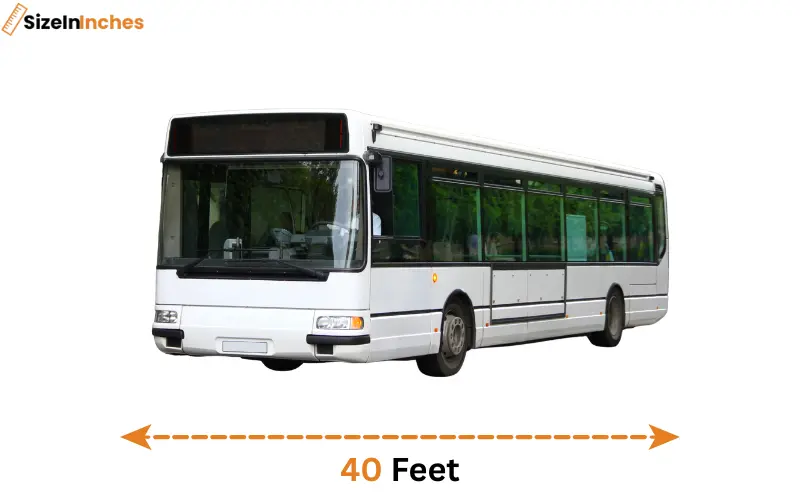
Public transit systems rely on 40-foot buses as their standard full-size model. This is defined by transportation manufacturers and used in major cities worldwide.
You encounter these buses daily on busy roads and highways. They occupy a full lane and dominate traffic space.
Standing next to one gives you a clear sense of scale. It is far longer than a car and clearly structured.
This makes it a perfect real-life example of a 40 feet size.
3. Semi-Trailer Container Unit
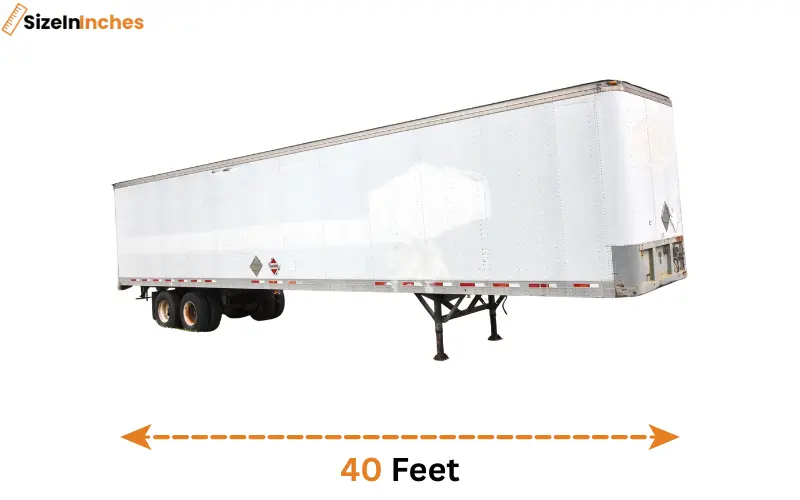
Freight systems use 40-foot containers mounted on trailers for long-distance cargo transport. This setup is standardized in logistics.
You’ll see these moving across highways carrying goods between cities.
Walking alongside one emphasizes how long the structure really is. It keeps extending as you move.
This creates a strong mental image of a 40 ft measurement.
4. Sailing Yacht in the 40-Foot Class
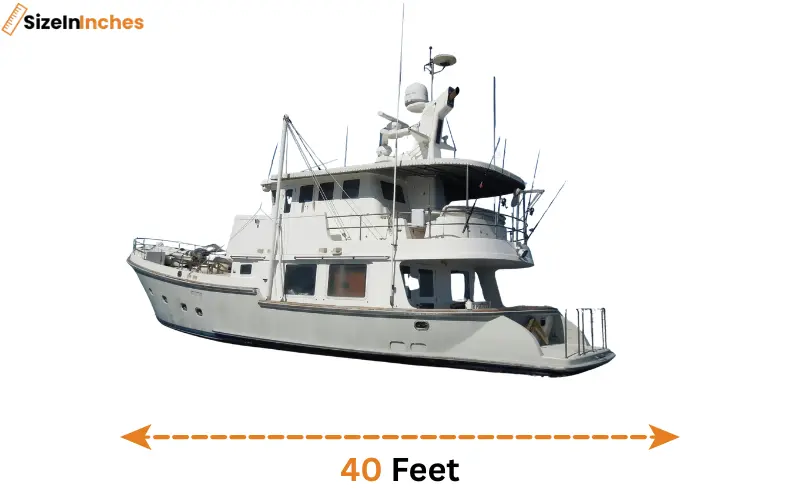
Marine classification defines a 40-foot yacht category used in both recreational and competitive sailing.
These boats are commonly docked in marinas and coastal areas.
Standing next to one shows a long, sleek shape cutting across the waterline.
It feels extended and balanced in length.
This helps you visualize 40 feet in a natural, flowing environment.
5. Institutional Flagpole
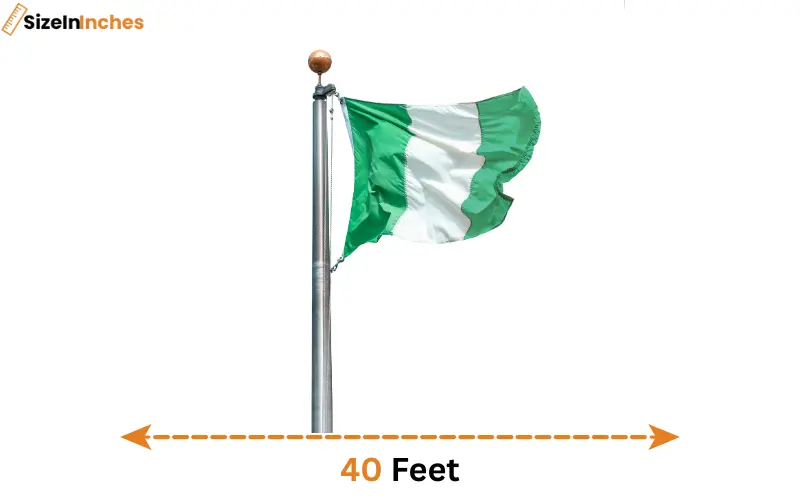
Flagpoles installed at schools and offices are often built at 40 feet. This height is chosen for visibility and structural balance.
You see them in open grounds and public areas.
Looking up from the base, the pole stretches high above surrounding structures.
It creates a strong vertical presence.
This is a reliable reference for how tall is 40 feet.
6. Utility Infrastructure Pole
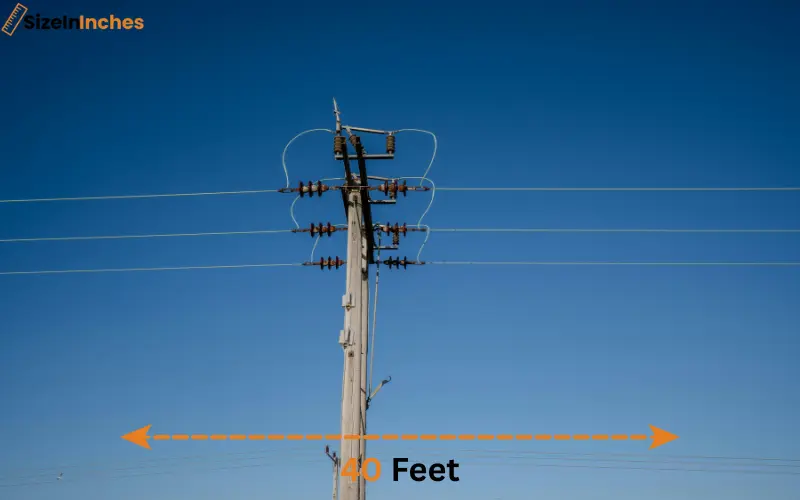
Power distribution systems use poles that are manufactured at 40 feet for standard installations.
You see these along streets carrying cables overhead.
Standing near one shifts your focus upward.
It emphasizes height rather than distance.
This helps connect vertical perception to the measurement.
7. Residential Lap Pool Length
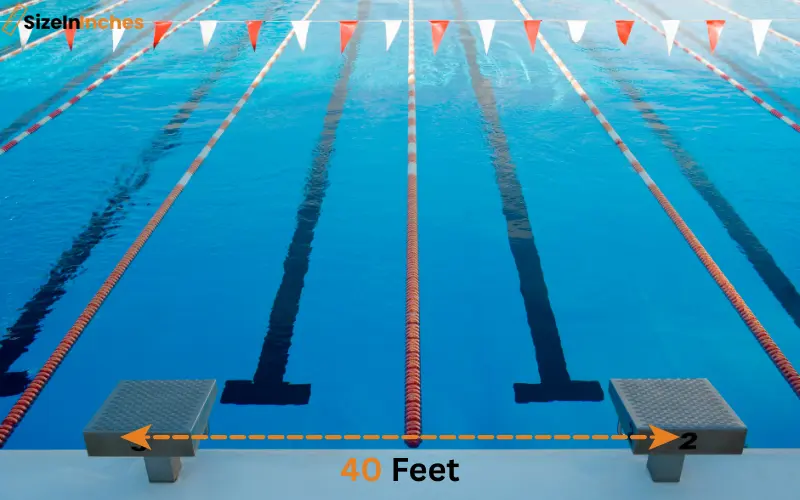
Some private fitness pools are designed at exactly 40 feet to allow consistent swimming distance.
These pools are used in training setups and modern homes.
Swimming from one end to the other feels like a full effort.
It’s not a quick movement—it’s a stretch.
This gives a physical understanding of how far is 40 feet.
8. Modular Housing Section
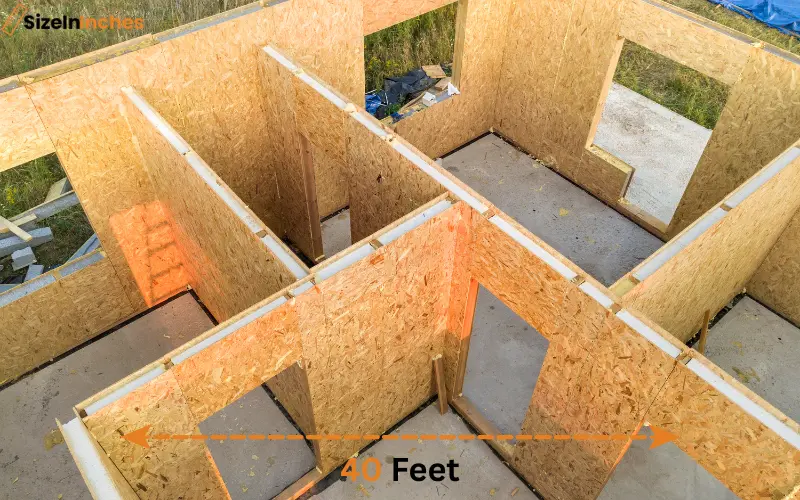
Manufactured homes are transported in sections that include 40-foot units.
These are delivered to sites and assembled into full homes.
Standing beside one feels like standing next to a complete room laid out sideways.
It covers significant ground space.
This makes the measurement easy to grasp.
9. Flatbed Transport Platform
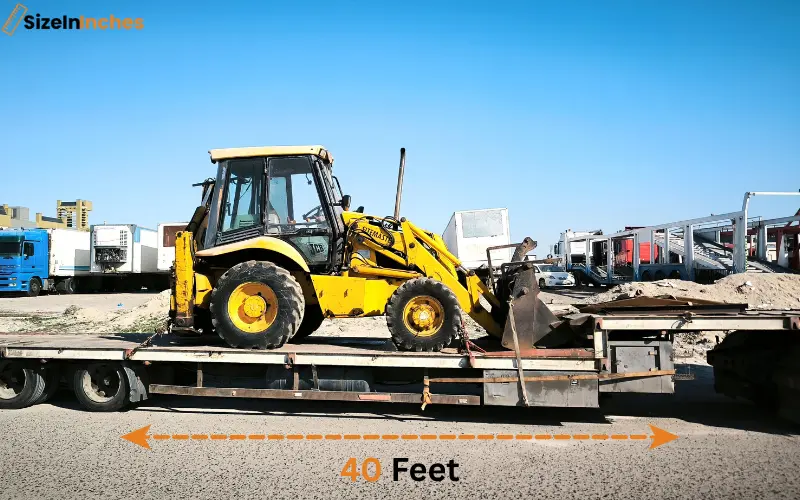
Transport platforms used for heavy equipment are built at 40 feet for balanced load distribution.
You see these carrying construction machinery.
Walking alongside one reinforces the length.
It keeps extending further than expected.
This creates a strong spatial reference.
10. Bridge Beam Segment
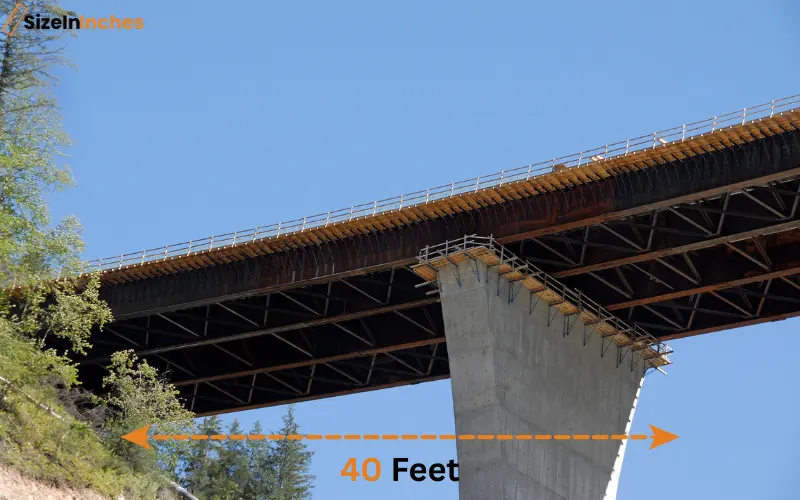
Infrastructure beams used in bridge construction are fabricated in 40-foot lengths for transport efficiency.
You’ll see these at construction sites.
Standing beside one shows a long, rigid structure.
It defines space with precision.
This helps visualize industrial scale.
How 40 Feet Feels in Different Spaces
Inside a building, 40 feet feels huge. It can stretch across multiple rooms without interruption.
Outside, it feels more balanced. In open space, it becomes a comfortable walking distance.
That difference changes how you perceive size.
Vertical vs Horizontal Perspective
Horizontally, 40 feet is a distance you can walk in seconds.
Vertically, it becomes something you look up at. It feels much larger when it rises into the air.
That’s why a 40-foot pole feels bigger than a 40-foot road stretch.
Comparing 40 Feet to Other Sizes
- Compared to 35 feet: the extra space equals the length of a doorway plus a refrigerator
- Compared to 45 feet: the difference is similar to the front half of a car
- Compared to 80 feet: that’s two full bus lengths placed end to end
These comparisons make the differences easier to understand.
We have more guides on feet for you to make measurements easy to understand:
Estimating 40 Feet Without Tools
First method: walk naturally and count 16 steps. Each step is roughly 2.5 feet, giving you a reliable estimate.
Second method: use floor tiles. If tiles are 1 foot wide, count 40 tiles in a straight line.
Third method: use your body. If your height is 5.8 feet, then seven full arm spans equal roughly 40 feet.
These methods help you estimate distance anywhere.
FAQs
How long is 40 feet in meters?
40 feet equals 12.19 meters. This is the standard conversion used globally in construction.
How many steps is 40 feet?
Most people take about 16 steps. Each step covers roughly 2.5 feet.
How tall is 40 feet compared to a house?
40 feet is close to a four-story building. Most houses are shorter than this height.
Is 40 feet bigger than a school bus?
Some buses are 40 feet long, while others reach 45 feet. So it matches many standard city buses.
How long does it take to walk 40 feet?
At normal speed, it takes about 7 to 8 seconds to walk that distance.
Conclusion
The easiest way to picture 40 feet is by thinking of a bus, a shipping container, or a tall palm tree. These are clear, memorable references.
Once you connect the number to real objects, the measurement becomes natural. Save this page so you always have a quick mental reference when you see 40 feet again.