You are ordering a 5mm bead online for a bracelet. The photo looks perfect, but you won’t know if 5mm is the right size until it arrives.
Millimeters are tricky like that. Unlike inches or feet, they’re too small to imagine without a reference, and your brain doesn’t naturally store these tiny measurements.
This article shows you exactly how big is 5mm like using real objects you can picture instantly.
5mm at a Glance
5mm equals 0.197 inches, 0.5 centimeters, and 0.005 meters. If you’re wondering what does 5mm look like, it is about half the width of your pinky fingernail and similar to a small bead or LED.
Conversion Table
| Unit | Value |
| Millimeters | 5 mm |
| Centimeters | 0.5 cm |
| Inches | 0.197 in |
| Meters | 0.005 m |
On a ruler, 5mm sits exactly halfway between 0 and the 1cm mark. If you have a ruler nearby, look at that point — that is the exact size.
How to See 5mm Right Now Using Your Hand
Look closely at your pinky fingernail. Focus on the thin white strip at the tip—not the entire nail. That visible white edge is very close to 5mm for most adults, making it one of the fastest ways to understand the size without tools.
Now try another method. Hold your thumb and index finger slightly apart and slowly bring them closer until the gap matches the width of that nail tip. That small space between your fingers is roughly 5mm, giving you a quick physical reference.
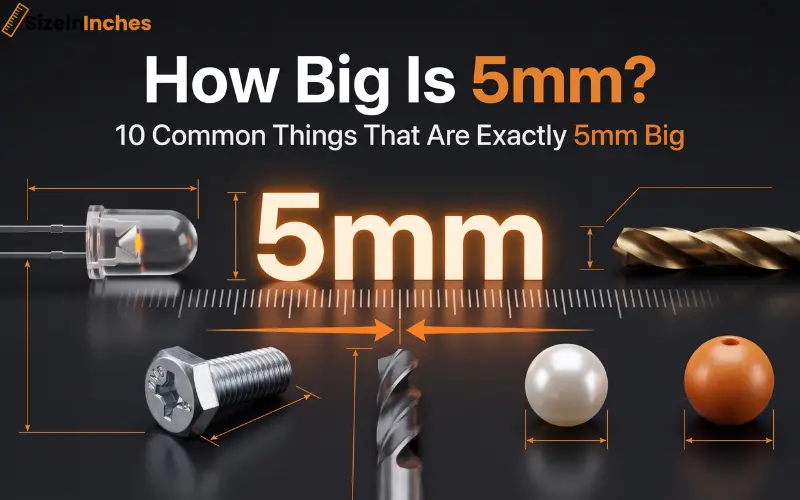
10 Real Objects That Are Exactly 5mm
Each object below has been verified against official manufacturing standards, ISO specifications, or industry measurements. No guessing. No approximations.
1. 5mm LED Bulb
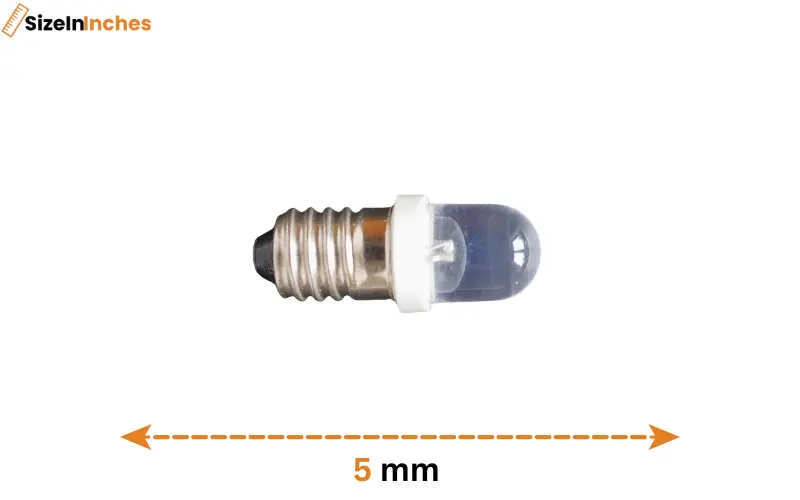
Exact size: 5mm diameter
Standard: T-1 3/4 LED specification
A 5mm LED bulb is manufactured under the T-1 3/4 standard, which defines the lens diameter as exactly 5 millimeters. This size is used globally in electronics and circuit boards.
You’ll see these in indicator lights, Arduino kits, and DIY electronics projects.
Holding one feels like gripping a tiny dome-shaped bead with a smooth surface.
Its size is small but clearly visible, especially when placed against your fingertip.
This is one of the clearest ways to understand how big is 5mm.
2. M5 Bolt
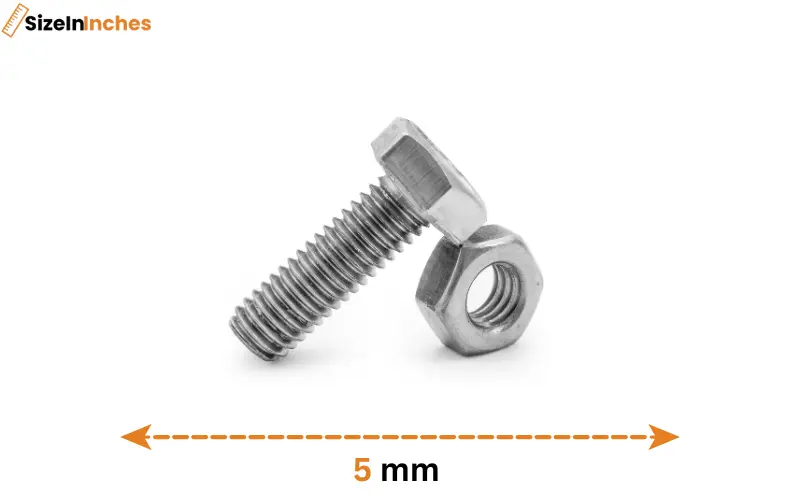
Exact size: 5mm diameter
Standard: ISO 261 / ISO 965
An M5 bolt has a shank diameter defined at exactly 5mm under ISO metric standards. This sizing is used in engineering worldwide.
You’ll find these in machinery, bicycles, and furniture assembly kits.
Holding one gives you a sense of a slim but solid metal rod.
It feels precise and engineered, not fragile.
This gives a clear reference for 5mm size.
3. 5mm Drill Bit
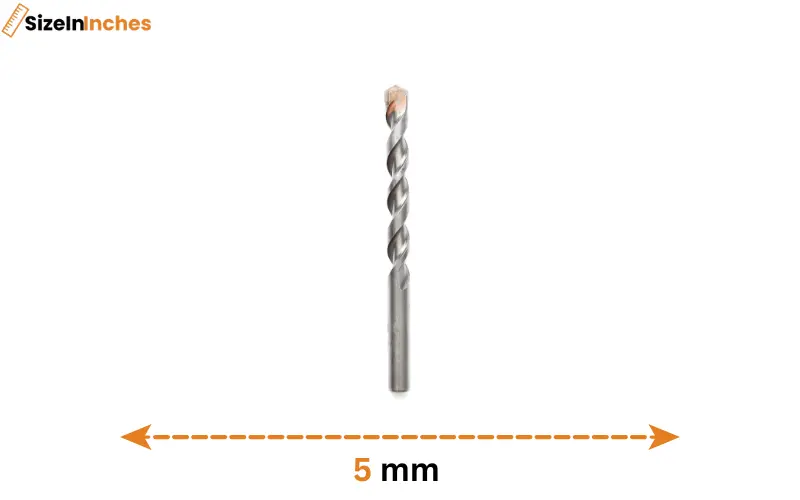
Exact size: 5mm diameter
Standard: ISO 235
A 5mm drill bit is manufactured to exact diameter tolerances under ISO standards. Precision is critical for drilling accurate holes.
These are used in woodworking, metalwork, and home repairs.
Looking at the tip shows a narrow cylindrical shape with sharp edges.
It’s small but very defined.
This helps visualize how long is 5mm.
4. 5mm Pearl
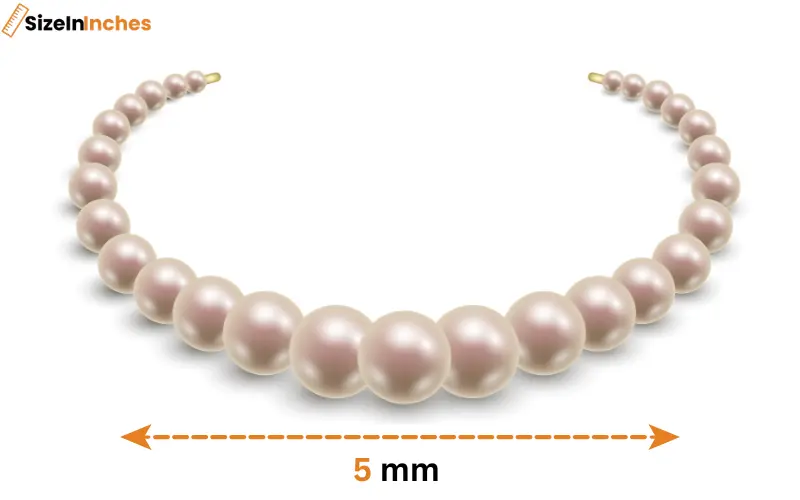
Exact size: 5mm diameter
Standard: Jewelry sizing standard
Jewelry pearls are graded by exact diameter, and 5mm is a standard size used in fine accessories.
You’ll see these in necklaces, earrings, and bracelets.
Holding one feels delicate, smooth, and lightweight.
It sits neatly between your fingertips.
This is a perfect example of 5mm diameter.
5. 5mm Round Bead
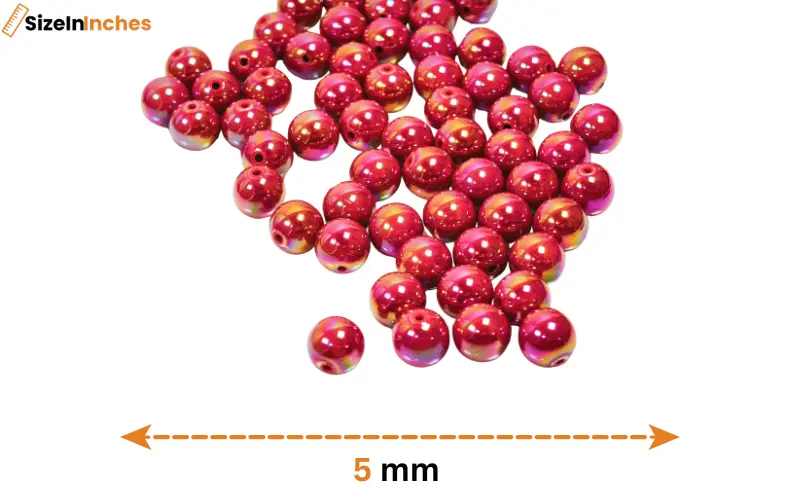
Exact size: 5mm diameter
Standard: Jewelry manufacturing standard
Beads are produced in exact sizes, and 5mm is widely used in crafting and jewelry making.
You’ll find them in bracelets, DIY kits, and decorative designs.
Looking at one reveals a small, perfectly round shape.
It’s easy to compare with other bead sizes.
This is one of the best things that are 5mm.
6. 5mm Jump Ring
Exact size: 5mm outer diameter
Standard: Jewelry findings specification
Jump rings are used to connect chains and clasps, and 5mm is a fixed industry size.
You’ll see these in necklaces and bracelets.
Holding one shows a tiny circular loop.
It feels light but structured.
This shows how 5mm looks like in jewelry.
7. 5mm Ball Bearing
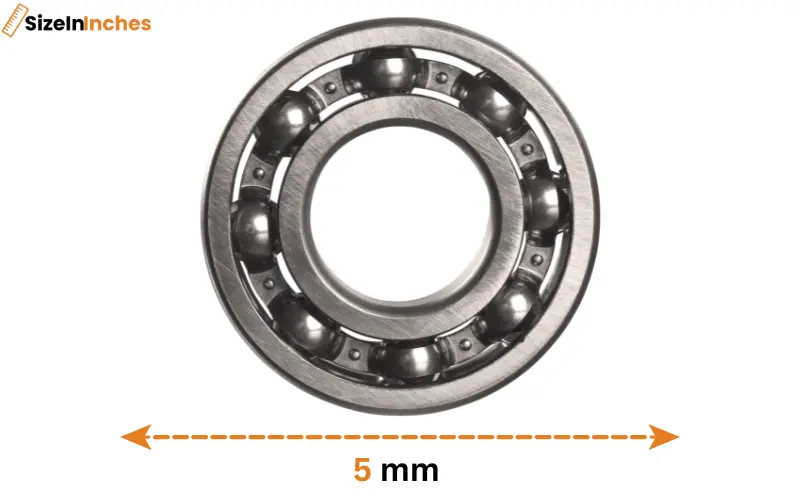
Exact size: 5mm diameter
Standard: ISO 15
Ball bearings are precision components, and 5mm diameter variants are manufactured for mechanical systems.
You’ll find these in tools, machines, and moving parts.
Holding one feels like a tiny polished steel ball.
It reflects light clearly due to its smooth surface.
This gives a strong sense of 5mm size.
8. 5mm Hex Key
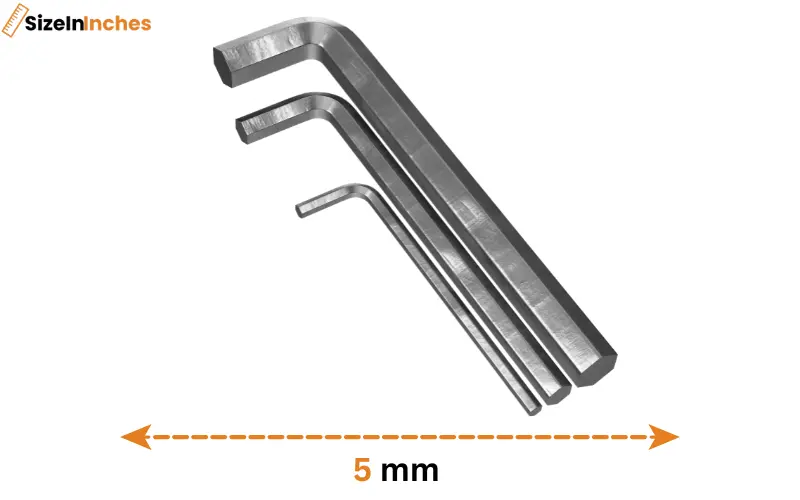
Exact size: 5mm across flats
Standard: ISO 2936
A 5mm hex key is defined by the distance between opposite flat sides of the hex shape.
These are used for assembling furniture and tightening bolts.
Looking at the tip shows a small hexagonal profile.
It fits perfectly into matching fasteners.
This demonstrates 5mm in practical use.
9. 5mm Dowel Pin
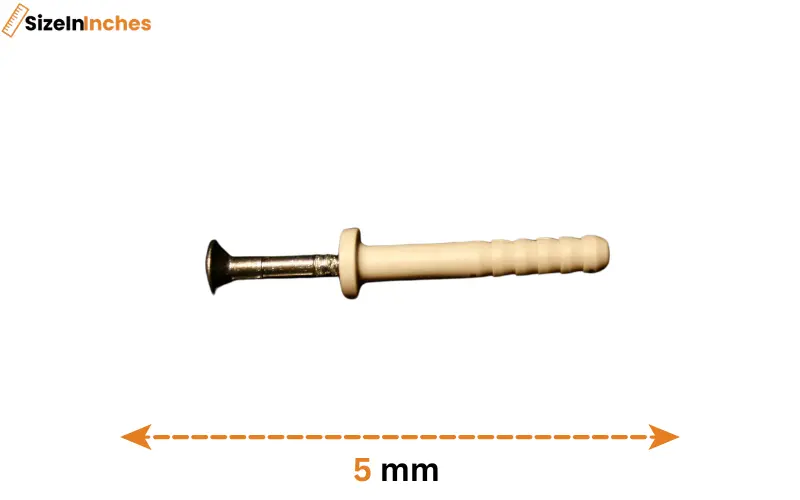
Exact size: 5mm diameter
Standard: ISO 8734
Dowel pins are used for alignment in machinery and woodworking, with exact diameter control.
You’ll see them in mechanical assemblies.
Holding one shows a smooth cylindrical shape.
It feels compact and precise.
This helps visualize how big is 5mm.
10. 5mm Rivet
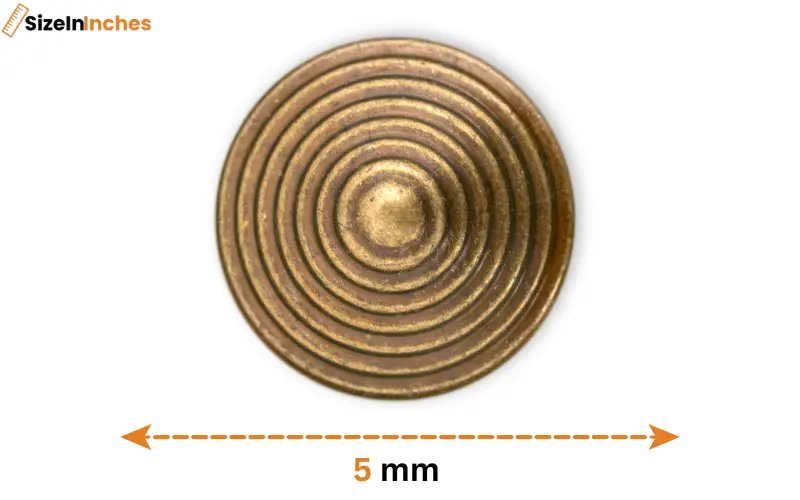
Exact size: 5mm diameter
Standard: DIN/ISO rivet standard
Rivets are fasteners used in metalwork, and 5mm refers to the shank diameter.
You’ll see these in construction and repairs.
Looking at one reveals a small but sturdy piece.
It feels durable and engineered.
This shows a real-world 5mm measurement.
Here we have more size guides:
5mm Compared to Common Sizes
1mm ▌
2mm ▌▌
3mm ▌▌▌
5mm ▌▌▌▌▌ ← You are here
10mm ▌▌▌▌▌▌▌▌▌▌
25mm ▌▌▌▌▌▌▌▌▌▌▌▌▌▌▌▌▌▌▌▌▌▌▌▌▌
- 5mm vs 3mm: difference equals slightly thicker than two stacked credit cards
- 5mm vs 10mm: exactly half a centimeter
- 5mm vs 25.4mm: about one fifth of an inch
Where 5mm Shows Up Without You Noticing
In jewelry, 5mm beads and pearls are extremely common. They create a balanced look—small enough to feel elegant, but large enough to stand out.
In hardware, 5mm is used in bolts, drill bits, and fasteners. It’s a standard size that balances strength and precision.
In electronics, 5mm LEDs are everywhere. From indicator lights to DIY circuits, this size is one of the most widely used.
How to Measure 5mm Without a Ruler
Method 1 — Pinky Fingernail Tip
Look at the white tip of your pinky nail. This section is close to 5mm wide for most adults. Use it as a quick visual comparison. It’s fast and always available.
Method 2 — Use a 5mm Object
Pick any object from this list, like a bead or LED. These are exact references. Place it next to what you’re measuring.
Method 3 — Using a Ruler
Find the 0 mark and the 1cm mark. The midpoint between them is exactly 5mm. That point gives you precise measurement.
5mm Quick Reference
| Object | Size | Where to find |
| 5mm LED | 5mm dia | Electronics store |
| M5 bolt | 5mm dia | Hardware store |
| 5mm pearl | 5mm dia | Jewelry store |
| 5mm bead | 5mm dia | Craft store |
| 5mm drill bit | 5mm dia | Tool shop |
FAQs
How big is 5mm in inches?
5mm equals exactly 0.197 inches. This is less than one quarter of an inch. It matches the diameter of a standard 5mm bead.
What does 5mm look like on your skin?
Place a 5mm bead on your hand. It covers about half your pinky nail width. This makes it easy to visualize.
Is 5mm bigger than a grain of rice?
Short grain rice measures close to 4–5mm. A 5mm object is nearly identical. This makes it a helpful comparison.
How do I measure 5mm without a ruler?
Use a 5mm bead or LED. You can also use your fingernail. Both methods are quick and reliable.
What jewelry size is 5mm?
5mm is a standard bead size. It’s used in bracelets and necklaces. It creates a subtle, elegant look.
Conclusion
The most useful references for 5mm are a pearl, an LED bulb, and an M5 bolt. These objects are precise, easy to find, and simple to visualize.
Understanding this size helps when buying jewelry, working with tools, or checking small components. Save this page so you always have a clear reference for how big is 5mm.